
How Unity Health Toronto is helping community organizations enhance the delivery of patient-centred palliative care services
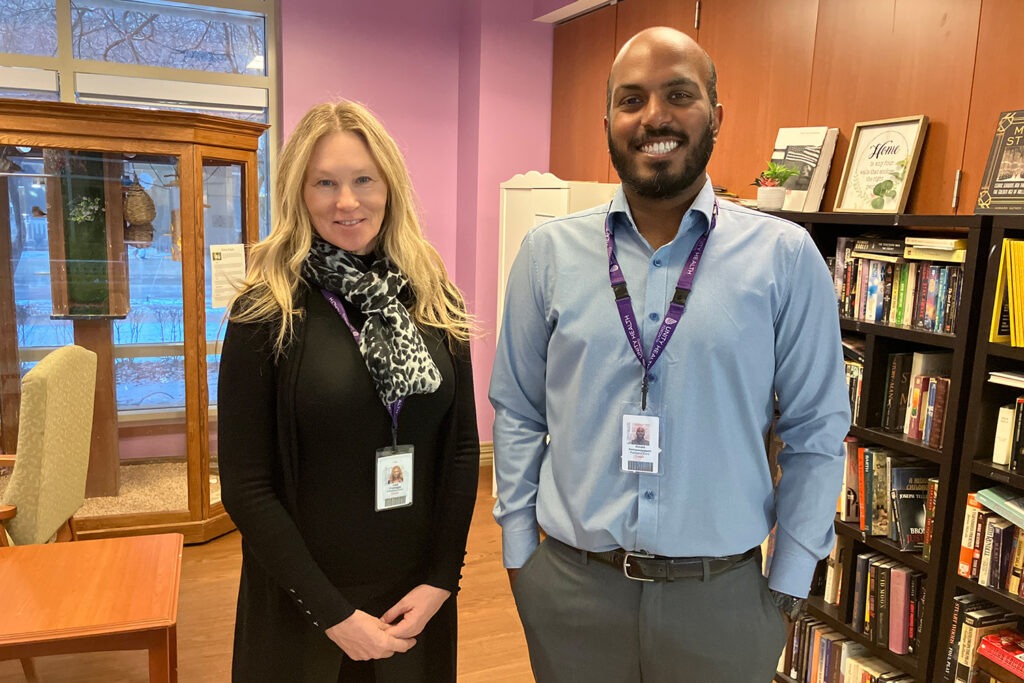
There’s a misconception that palliative care begins when a person is nearing the end of their life, and many patients don’t receive it early enough. A new program supported by Unity Health Toronto is helping community health organizations deliver comprehensive, patient-centred palliative care services, when and where patients needs it.
Guided by Ontario Health and the Ontario Palliative Care Network, the Palliative Care Clinical Coaching Program connects Palliative Care Clinical Coaches – health care providers with expertise in palliative care – with local health care organizations to provide palliative care, support and mentorship to frontline clinicians, staff and caregivers.
The program is part of a province‑wide effort to strengthen high‑quality palliative care in community settings, recognizing that a palliative approach to care delivered earlier in the course of serious illness offers significant benefits – not just for those receiving care, but for their families, care teams and communities.
“When we think of palliative care, we often only think of the last months, weeks, days or hours of a person’s life,” says Ronald Annushton, Palliative Care Clinical Coach at St. Michael’s. ”But that’s a common myth of palliative care. Someone newly diagnosed with dementia could have a life trajectory north of five years, and considering a palliative approach to care around the time of diagnosis promotes an improved quality of life and a care plan that reflects the patient’s wishes, values and goals for end-of-life.”
Enjoying this story? Sign up for the Unity Health Toronto newsletter, a monthly update on the latest news, stories, patient voices and research emailed directly to subscribers.
Palliative care aims to reduce suffering and improve the quality of life for people who are living with a serious illness through the provision of pain and symptom management and social, emotional, spiritual, psychological and practical support. Community-based organizations, including long-term care homes, retirement homes, shelters and primary care facilities support people living with serious illness, but they don’t always have the training, shared understanding or infrastructure in place to apply a comprehensive approach to palliative care, says Annushton.
That’s where he and his colleague Trish Flannagan come in. The coaches work in collaboration with a regional implementation team from Ontario Health to advance Ontario’s Model of Care (MOC) for Adults Receiving Palliative Care in Community Settings. This MOC is a series of 13 recommendations for making palliative care more accessible and coordinated across community organizations, with the aim of reducing reliance on acute care.
“We offer anything from formal education, to quality improvement and resources, to mentorship, where we’ll work with staff on-site to support them through difficult conversations or advanced care planning, which is when we help patients understand the seriousness of their illness and discuss their preferences for end of life care,” says Annushton.
The coaches also help teams with referrals and connections to community resources, large scale practice changes, new policies and procedures, navigating digital palliative care tools and managing grief and bereavement among families, caregivers and staff.
“There’s a lot of burnout in this field, and staff at a long-term care home or supporting people who are vulnerably housed might be dealing with a death once a week,” says Flannagan. “That’s a lot to navigate in a field that’s already emotionally taxing, so we try to help organizations with that as much as we can.”
The Palliative Care Clinical Coaching Program was introduced in the downtown east area in 2024 following a successful joint application between St. Michael’s and Inner-City Health Associates (ICHA) – a group of more than 200 clinicians providing integrated primary care, mental health and specialist services to people experiencing homelessness and housing precarity across Toronto. Delivered on behalf of the Downtown East Ontario Health Team (OHT), the program focused on people who are vulnerably housed in year one, before expanding to other organizations in year two.
Flannagan works with Palliative Education and Care for the Homeless (PEACH), which is a mobile, equity oriented palliative care service delivering interdisciplinary care directly in shelters, encampments, supportive housing and on the streets. Her work is part of the focus to support people who are vulnerably housed in the Toronto region.
Supplementing Flannagan’s work, Annushton was brought on to support primary care facilities, retirement homes and long-term care homes. One of his first partnerships was with The Rekai Centres at Sherbourne Place, which provides long-term care to almost 100 residents.
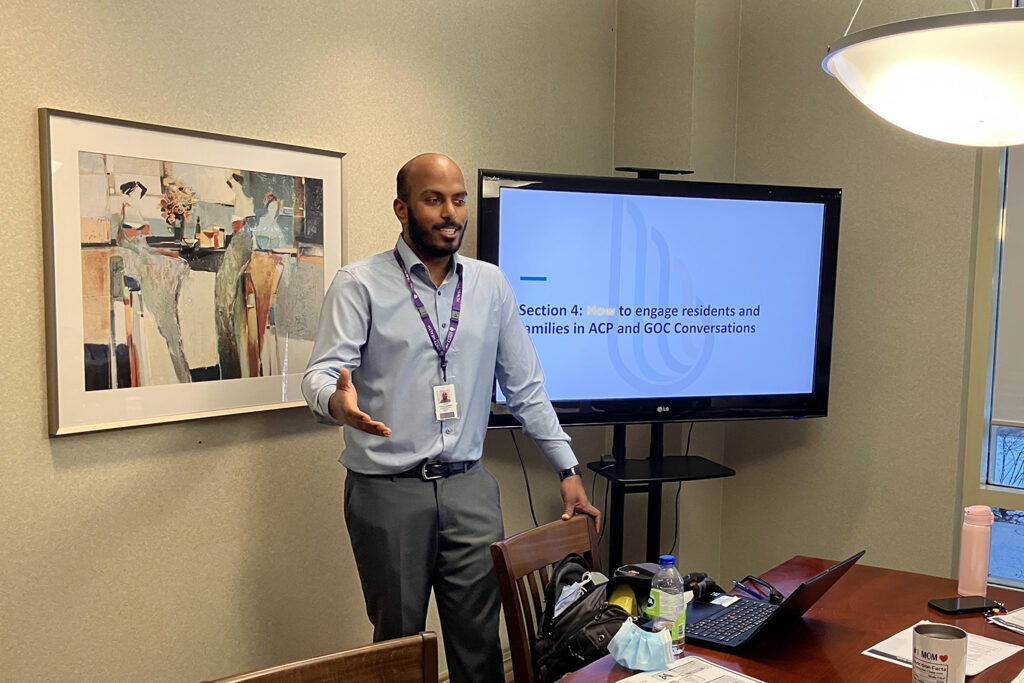
Since partnering with The Rekai Centres at Sherbourne Place just a few months ago, Annushton has led several education sessions for staff, connected the home with additional community supports and strengthened policies and procedures. He’s also supported quality improvement projects and provided one-on-one mentorship to staff.
“We’ve found real synergy with Ronald, especially being able to fulfill the vision we had for palliative care at Rekai,” says Aliyah Budhooram, Informatics, Quality Improvement and Education Manager at the Rekai Centre at Sherbourne Place. “When I look at how we’re building and excelling on our current Palliative and End of Life Program, I’m so thankful for the support. We couldn’t have implemented everything we wanted to without him.”
One of the biggest changes that Budhooram has noticed has been the increased confidence and competence among staff, who are more willing to have hard conversations or complete difficult documentation. She says that staff don’t feel as negative or bogged down by the work, which translates to a better resident experience.
“I’ve seen language, sensitivity and connectedness change in the home,” she says. “Staff are more open about their feelings and residents are better supported through their own grief. A death in the home can have tremendous impact on other residents. Our staff, students and volunteers are better educated and equipped to have difficult conversations. It’s been really special to see this happening.”
Flannagan’s partners have noticed the same. She was recently working in a shelter setting where staff expressed discomfort having conversations with clients about advanced care plans. With Flannagan’s support, one community organization reported 59 per cent completion of advanced care plans among 75 clients.
“A lot of the clients in my sector don’t have family to share their wishes for end of life, so it’s important that staff fill that gap,” she says. “Our work has a health care lens, but it’s also about giving people an opportunity to talk about the things that are important to them before and after they die. Framing it this way has helped staff feel more comfortable, and that’s really wonderful.”
Since the program launched in 2024, Annushton and Flannagan have supported more than 14 organizations, with plans to expand if their funding is renewed. Coaches across Ontario are anxiously awaiting a decision from the provincial government, as the current funding is set to expire in March.
“It’s hard to overstate the impact of this program,” says Flannagan. “We know it alleviates pressures on our health care system, but it’s so much more than that. It gives people the opportunity to express themselves and be heard. Many community organizations haven’t had the skills, resources or knowledge to do this previously, and they’re so grateful to have it now.”
Annushton echoes this sentiment, and points to how Unity Health – an organization that provides compassionate physical, emotional and spiritual care to all in need – is uniquely positioned to continue this work.
“From an organizational standpoint, there’s a strong connection to achieving our mission and values,” he says. “To be able to provide care that’s rooted in someone’s human dignity, particularly as they near end of life, is a privilege that I don’t take lightly. Giving patients peace of mind and empowering frontline staff is so rewarding. I find meaning in this work every day.”