
Gift of Life: St. Michael’s Hospital hits significant milestone with 50 living kidney transplants in one year
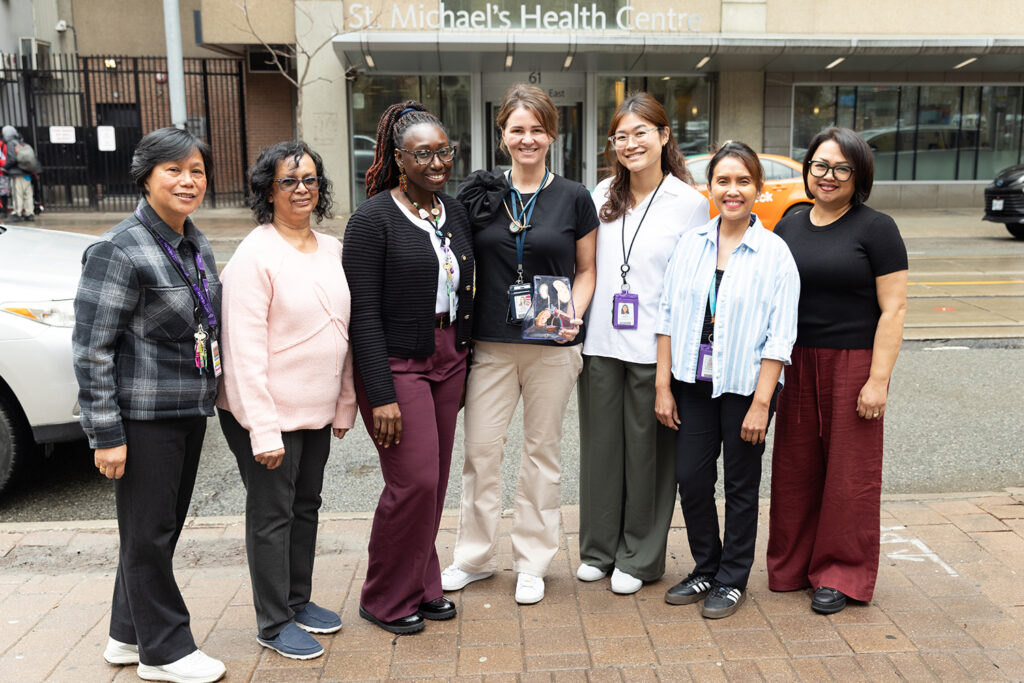
The St. Michael’s Hospital Renal Transplant Program is proud to announce the successful completion of 50 living donor kidney transplants in 2025. This number is a testament to a revitalized program that has overcome the staffing and resource challenges of the post-pandemic era, giving 50 more patients an expedited path to a life without the complications of a deteriorating kidney and dialysis.
“50 is a milestone that we’re all very proud of,” says Kathryn Salvatore, a living donor nurse coordinator with the Renal Transplant Program. During the height of the pandemic, she said, the program struggled to fill surgery dates because they didn’t have enough living kidney donors to match with patients in need. “There were fewer people coming forward to donate – that was a challenging time for our program and it affected our numbers over the last few years.”
A living donor transplant is when a healthy living person donates an organ, or part of an organ, to a recipient with end-stage organ failure. The most common living donor transplant is a kidney because donors can live with just one.
Dr. Zaltzman, transplant nephrologist and Medical Director of the Kidney and Metabolism Program at Unity Health, said that for every successful match, three or four potential donors come forward, but many are turned down due to health issues, anatomical complications, or incompatible matches. This makes the 50-transplant mark even more impressive, considering the sheer volume of screening and coordination required.
While St. Michael’s Hospital performs between 140 and 150 kidney transplants annually, living donor procedures are particularly vital because of the superior outcomes they offer patients.
“Living kidney donation is a better option in many ways,” says Zaltzman. “The patient outcomes are better because kidneys from living donors last much longer. These patients also avoid dialysis since the healthy kidney usually functions immediately.”
Enjoying this story? Sign up for the Unity Health Toronto newsletter, a monthly update on the latest news, stories, patient voices and research emailed directly to subscribers.
Adding to the complexity of the donation process, the Renal Transplant Program at St. Michael’s Hospital is also part of the National Kidney Paired Donation Program, which acts like a swap system across Canada. If a person wants to donate to a loved one but isn’t a match, they can donate to a stranger elsewhere in the country in exchange for their loved one receiving a compatible kidney from another donor.
“Kidney transplants are one of the most intricate surgeries because of the amount of people involved and resources to make this happen,” Dr. Zaltzman explains. “It’s like we’re launching a space shuttle – the stakes are high and dozens of variables must align perfectly to save a life.”
The program does much more than manage surgeries. An important role for nurse coordinators like Kathryn is the “workup” process, where they help donors navigate the emotional side of surgery and advocate for the donor’s well-being above all else. The surgery is often done laparoscopically with donors typically spending two to three nights in the hospital, but many donors have never undergone surgery before and arrive at the hospital feeling anxious.
“Our job is to reassure, support, comfort, and make them feel at ease,” Kathryn notes. “I need to ensure that donating is something they truly want. Any donor can opt out even right before the surgery date.”
Despite the technical and emotional intricacy of the transplant process, the heart of the Renal Transplant Program remains the donors — from family members to altruistic donors who give to strangers.
“People get turned down for all kinds of reasons, and they’re disappointed because they want to help,” says Zaltzman, emphasizing the deep motivation of those who donate. “If a donation like this is something you’re willing to do, it’s always a good thing to come forward.”
By Christine Davidson
Photo by Katie Cooper