
How this Unity Health information specialist makes knowledge accessible for staff
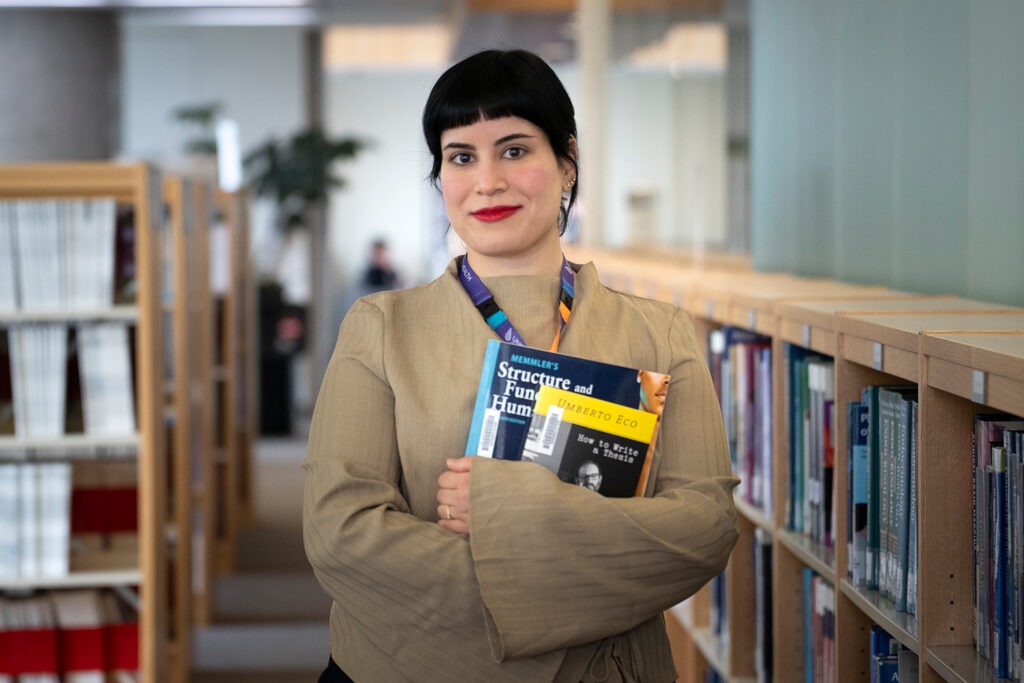
Sadaf Ullah
Sadaf Ullah, an Information Specialist at Unity Health Toronto on the Library Services team, was recently recognized by the Health Science Information Consortium with the Joan Leishman Award of Merit for Excellence in Health Science Information. The award is given to a library staff member in Ontario who has advanced health care through health science information service.
“It was a moment of shock when I learned I’d won the award,” says Ullah. “I’ve seen people win this before, and I felt really proud.”
For Ullah, libraries have always been a safe place. Somewhere to seek knowledge and find inspiration. That feeling is what led her to pursue an education in information sciences, and eventually become a librarian. Her career has been guided by the belief that information should be accessible, supportive, and empowering, especially in health care.
Enjoying this story? Sign up for the Unity Health Toronto newsletter, a monthly update on the latest news, stories, patient voices and research emailed directly to subscribers.
The path to health care information sciences wasn’t planned. During her education, Ullah worked in a library at a dental school, and then branched out into other roles at universities, a non-profit, and in government. Eventually she found her way to Unity Health Toronto.
Zachary Osborne, Manager Health Information & Knowledge Mobilization Program, says Ullah is a “tremendous asset to the Library Services team and to our health network,” describing her as creative, friendly, approachable and very proactive.
“Sadaf is always incorporating a critical quality improvement lens to her work and projects,” says Osborne. “She makes us very proud.”
Ullah’s day to day work can vary drastically. As the designated librarian for Nursing Practice and Education, she spends a lot of time doing what she describes as detective work; tracking down information and evidence to support projects and research being done across the organization. She also provides education and training for staff who are learning how to use various computer programs, research databases and more.
“People think of libraries in the most traditional sense,” says Ullah. “But the library is more than that. Of course we have a wonderful collection of books, but we also have journals, e-books, digital resources and the latest literature on many health care topics.”
The library team plays a significant role in ensuring staff have access to the tools and resources they need to complete their work. This requires a lot of outreach.
One of Ullah’s recent projects involved shadowing clinical nurse educators through their shifts, and figuring out what gaps the library could help them fill in terms of access to databases and practice standards.
Ullah noticed that many of the staff she followed were paying for subscriptions to certain nursing standards within their unit, so the library stepped in to ensure they could access those documents and materials without having to take on the cost themselves. This also centralized access to those nursing resources, benefitting staff across our entire health network, not just a single unit.
People aren’t always aware that the library can help with these kinds of initiatives, and Ullah says that making space for herself and her team in those clinical environments can bring a lot of benefits for staff and physicians. She actively seeks out spaces where nurses are already gathering, like education sessions, meetings, and learning environments, and finds ways to make the library visible and useful there.
Beyond Unity Health, Ullah is deeply involved in professional organizations, serving as incoming president of the Toronto Hospital Library Association and contributing to committees with health library consortia and provincial organizations. She’s also helping to reframe how libraries are perceived, embracing marketing and social media trends to show the relevance of modern library and information science.
“You can work behind the scenes and still make a huge impact,” she says. “But sometimes, putting yourself out there helps people see what’s possible.”
When students reach out to her on LinkedIn or at conferences, curious about her career path, her advice is simple: go for it. At the heart of the work is a love of helping people.
“If I find an article for a nurse, that nurse learns something new,” she says. “That knowledge might influence patient care, education, or a quality improvement project. That’s incredibly gratifying.”
By Olivia Lavery
Photos by Kevin van Paassen