
Toronto team leads first-in-Canada case of sustained HIV remission
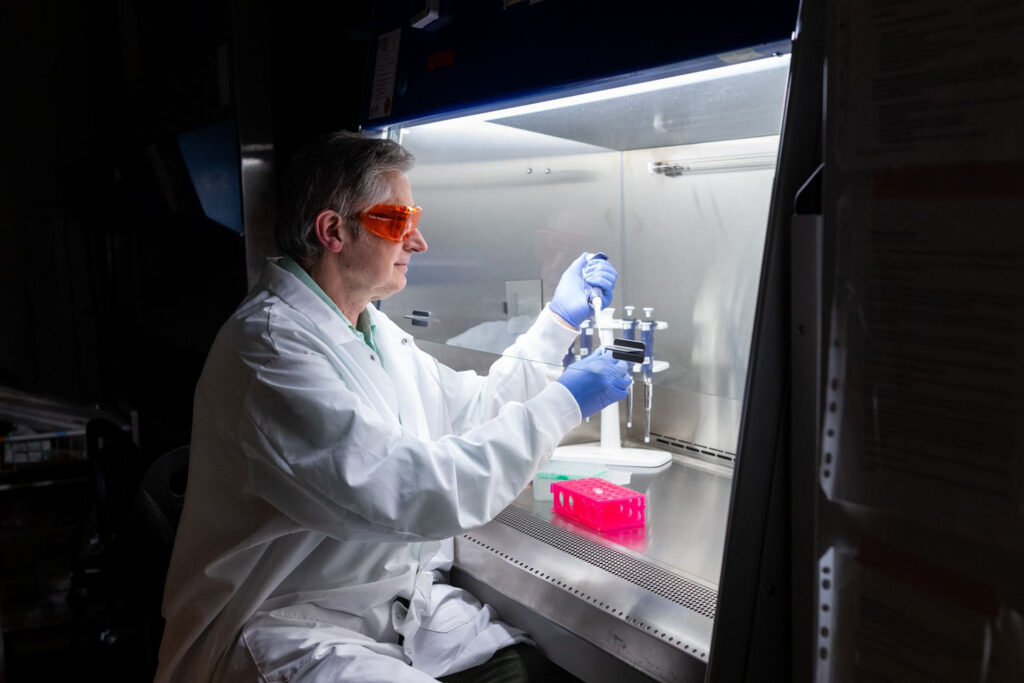
A team of clinicians and researchers at Unity Health Toronto’s St. Michael’s Hospital, the University Health Network, and University of Toronto have reported the first Canadian case of sustained HIV remission — and possible cure — in a 62-year-old man who received a bone marrow transplant to treat cancer.
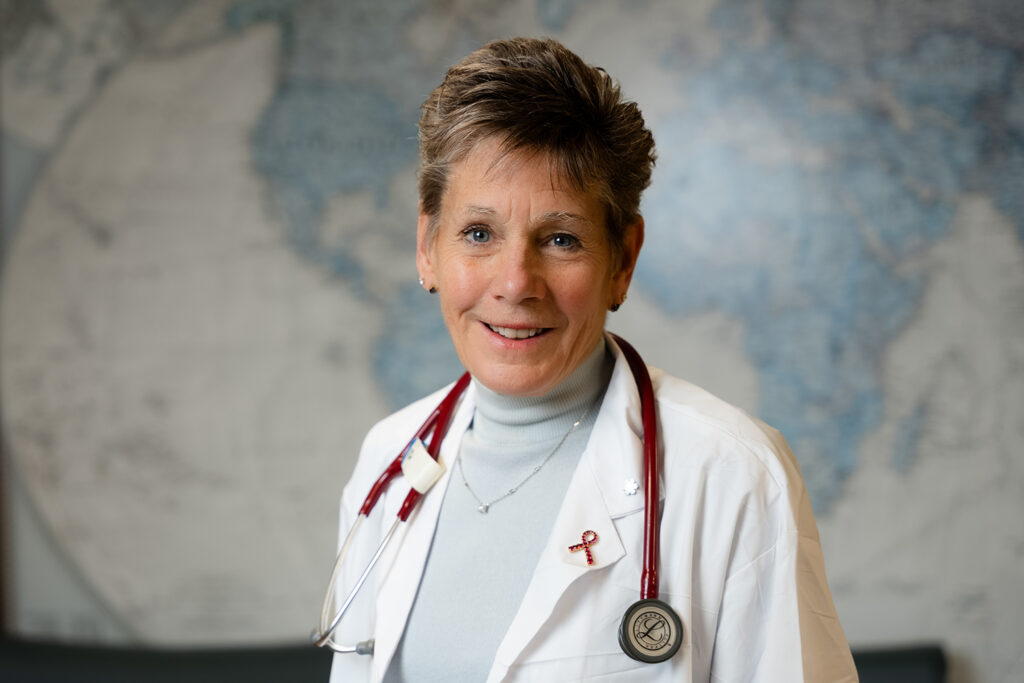
The work was co-led by Mario Ostrowski, a clinician-scientist at St. Michael’s Hospital, and a professor of immunology, medicine and laboratory medicine and pathobiology at U of T’s Temerty Faculty of Medicine and Sharon Walmsley, director of the HIV clinic at UHN and a professor of medicine at Temerty Medicine. The case was presented Saturday at the Canadian Association of HIV Research Conference.
Read more about this case in this story by The Globe and Mail.
The individual was first diagnosed in 1999 and has been living with HIV for 27 years, taking antiretroviral therapy (ART) throughout that time to suppress virus levels. He developed acute myelogenous leukemia in 2021 and underwent a bone marrow transplant at UHN’s Princess Margaret Cancer Centre with donor stem cells that were selected because they contain a rare “delta-32” mutation in the CCR5 gene.
The CCR5 gene encodes a protein on the surface of human immune cells that HIV uses to enter and infect cells. Individuals with a delta-32 mutation in the CCR5 gene do not make the receptor protein and are resistant to HIV infection.
“One percent of people of European ethnicity have bone marrows that are resistant to HIV infection,” says Ostrowski, who is also the Ontario HIV Treatment Network Applied Research Chair. “A bone marrow transplant from these donors can provide a potential cure.”
Enjoying this story? Sign up for the Unity Health Toronto newsletter, a monthly update on the latest news, stories, patient voices and research emailed directly to subscribers.
The individual discontinued ART in July 2025 and, as of April 2026, is in sustained remission with HIV levels remaining undetectable. If he continues to have undetectable levels of HIV for two-and-a-half years after stopping ART, the Toronto patient would join a group of ten individuals worldwide who are considered cured of HIV – making him the 11th.
“The small but growing number of these cases prove an HIV cure is possible,” says Walmsley, who is also the Speck Family Chair in Emerging Infectious Diseases. “Cases such as these provide important information for researchers to find ways to eradicate HIV from the body.”
In the five years since receiving the bone marrow transplant, researchers in Ostrowski’s lab have observed a continuous decline in HIV levels in the patient’s cells through several highly sensitive tests.
They saw a significant decrease in viral genetic material in the patient’s blood, including viral DNA representing the dormant form of HIV hidden in a reservoir. The HIV reservoir has long been a barrier to a cure because it is difficult to target and can be reactivated if ART is stopped.
The researchers were also unable to isolate viable virus from the patient’s white blood cells or detect HIV-specific immune responses.
Bone marrow transplants are not a standard treatment for HIV. The procedure carries significant risks and is only considered for patients who require a transplant to treat a life-threatening blood cancer.
Ostrowski says that by studying cases like the Toronto patient, researchers can gather clues to develop less toxic and less expensive approaches that can achieve similar outcomes. His lab aims to advance a cure for HIV by focusing on immune cells called T cells that can target the viral reservoirs.
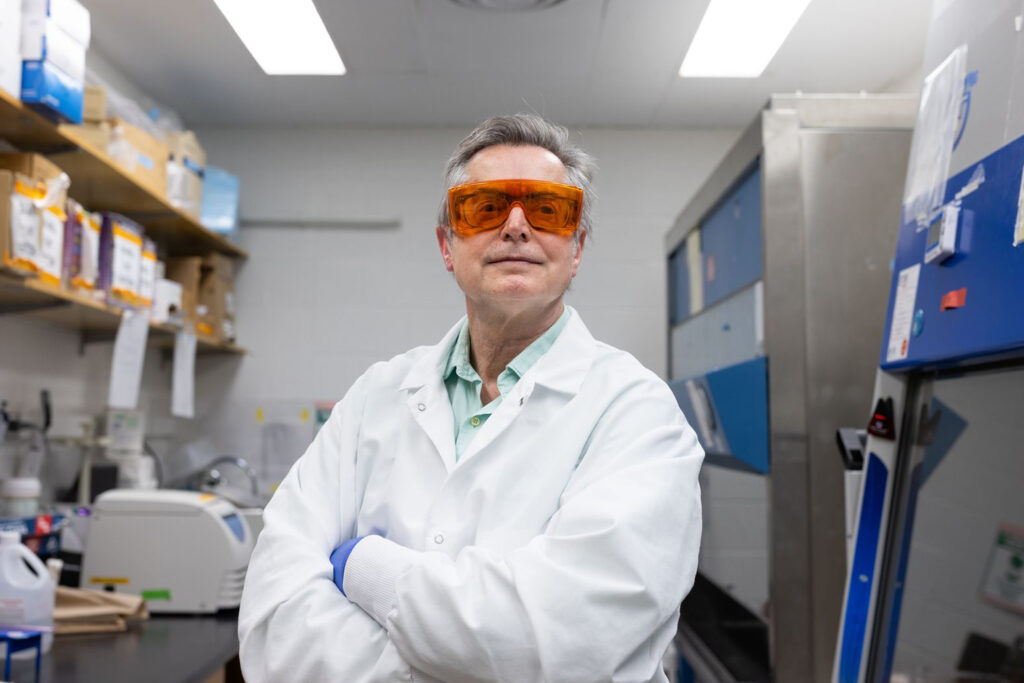
As an infectious disease physician working at St. Michael’s, Ostrowski serves patients with a variety of infectious diseases both in an outpatient and inpatient capacity. He also provides care for patients in the Positive Care Clinic (PCC) which provides total Human Immunodeficiency Virus (HIV) care and services to patients, offers pre- and post-exposure prophylaxis, and conducts research into the prevention and treatment of HIV.
Splitting his time between St. Michael’s and University of Toronto, Dr. Ostrowski’s research leverages the unique capabilities of the Toronto High Containment Facility, where parts of the testing for the Toronto patient were also carried out. Based at U of T, the facility is a specially equipped lab space that allows researchers to study pathogens like HIV in a safe and secure way. It is also a key research infrastructure asset for researchers across the city, driving advances in infectious disease prevention, detection and treatment.
Adapted from a story by University of Toronto and University Health Network
Photos by Johnny Guatto/University of Toronto