
Preparing Canada’s health system for military conflicts

Dr. Andrew Beckett
To prepare for major armed conflict involving Canada or its North Atlantic Treaty Organization (NATO) allies, the country must create a national framework for civilian–military medical integration, as the public health system would bear the burden of medical care, argue authors in a commentary in CMAJ (Canadian Medical Association Journal).
Co-authors include St. Michael’s physicians Andrew Beckett and David Klein who argue that there are several scenarios in which Canada’s various health systems may need to respond, from providing clinical health care and rehabilitation services to repatriated casualties, responding to domestic mass casualty attacks, and addressing cyber attacks that would disrupt health information systems and delivery. Military operations to support sovereignty in Canada’s north could put additional strains on health systems and infrastructure.
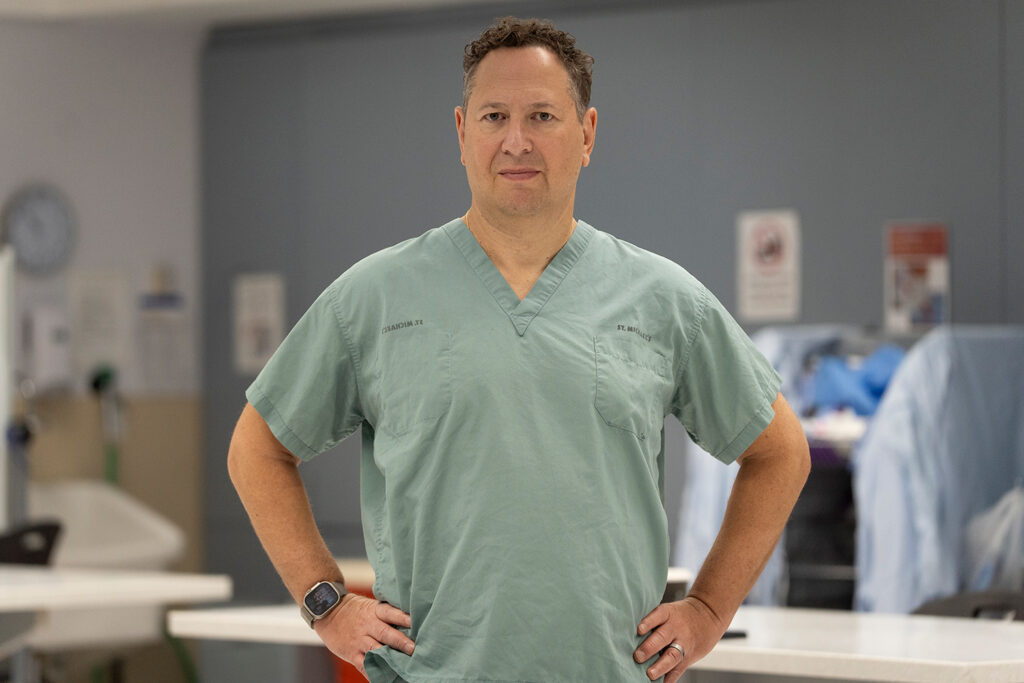
“In each scenario, the limiting resources would be trauma surgery, intensive care beds, blood supply, transport coordination, and real-time situational awareness,” writes Dr. Andrew Beckett, medical director, Trauma Program, St. Michael’s Hospital, Unity Health, Toronto and Lieutenant-Colonel, Canadian Forces Health Services. “All these resources depend on digital infrastructure enabling patient tracking, hospital capacity management, and interfacility communication, which may themselves be disrupted during cyber attacks.”
Read the commentary published in the Canadian Medical Association Journal.
“Canada’s vulnerability in the context of military conflict lies in its lack of a national framework that would coordinate large-scale evacuation of casualties, allocate scarce resources, and integrate provincial and federal surge capacity,” writes Dr. Jeremy Grushka, assistant professor of surgery, McGill University, Trauma Surgery Fellowship Program director, McGill University, co-director MUHC Centre for Global Surgery, Montréal, Quebec, with coauthors. “The country also lacks a standing command structure linking Canadian Forces Health Services, provincial and territorial ministries of health, the Public Health Agency of Canada, and Canadian Blood Services during national emergencies.”
“Civilian hospitals would carry any additional clinical burden of caring for injured service members, repatriated casualties, and affected civilians.”
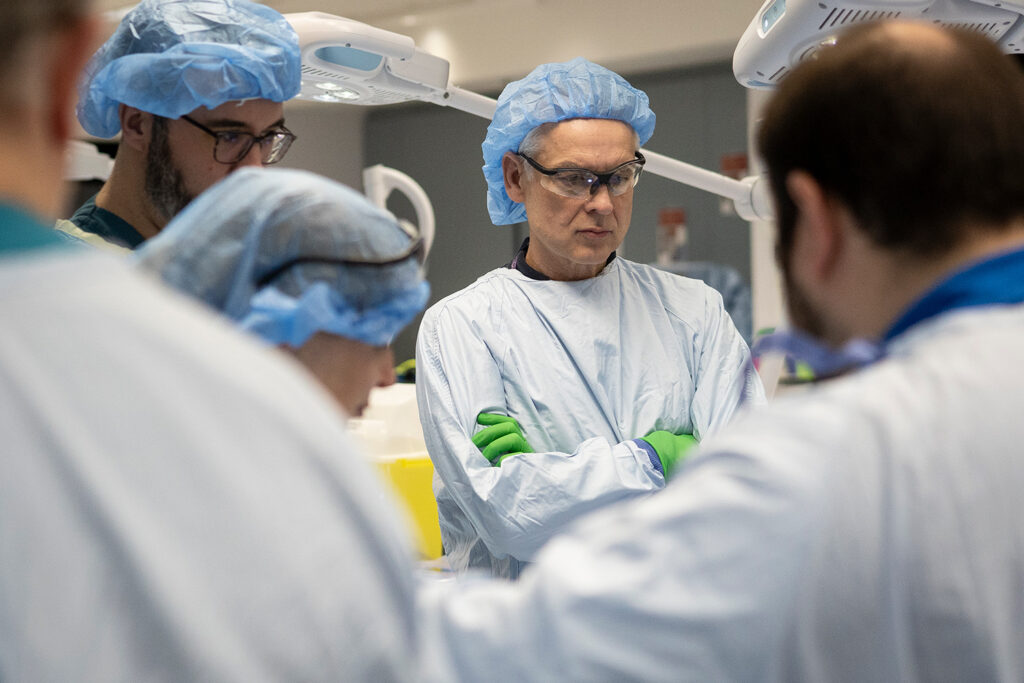
To help Canada prepare, a viable national framework should include 3 foundational pillars: sustained clinical readiness, dual-use capacity that can be expanded when necessary, and formal coordination between the Canadian Forces Health Services, Health Canada, and the Public Health Agency of Canada, in partnership with the provinces and territories.
Enjoying this story? Sign up for the Unity Health Toronto newsletter, a monthly update on the latest news, stories, patient voices and research emailed directly to subscribers.
This is not unprecedented, as Canada has had coordinated civilian–military medical governance in past war times.
“During World War II, federal authorities established mechanisms to balance military and civilian physician allocation and procurement at scale,” they write. “The contemporary context is more complex, but the principle endures. National emergencies require coherent medical governance that transcends institutional silos.”
“[W]e do not argue for militarizing health care but for structural coherence. Civilian hospitals will bear the clinical burden of sustained casualty events involving Canada’s people. Institutionalizing civilian–military medical integration now is a prudent investment in national resilience and the stability of Canadian health care,” the authors conclude.
__
“Preparing Canada’s health system for conflict: a framework for civilian–military medical readiness” published March 30, 2026.
By Kim Barnhardt, CMAJ
Photos by Kevin Van Passen