
Meet Dr. Dalia Rotstein, the St. Michael’s neurologist dedicated to improving care for women during pregnancy
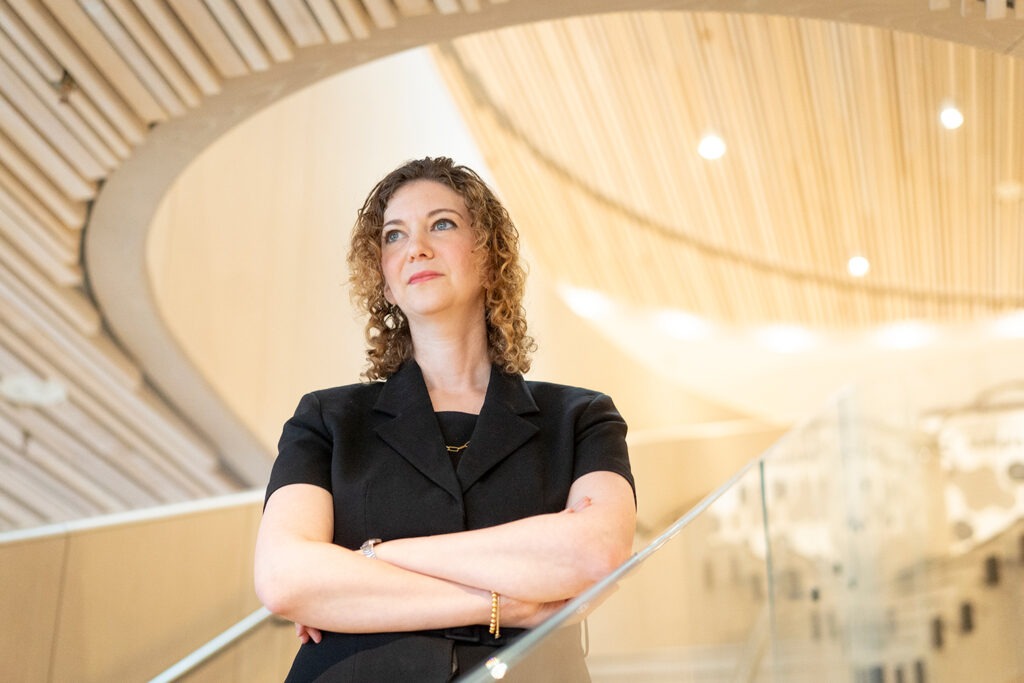
Dr. Dalia Rotstein
Dr. Dalia Rotstein is a Unity Health Toronto neurologist and clinician-researcher working to improve the treatment and care of pregnant women and new mothers.
According to Rotstein, certain rare neurological conditions predominantly affect women – and they often start just as they’re beginning their families and building their careers. “Unfortunately, we haven’t had very good information to inform counseling of women with these diseases around pregnancy,” she notes.
The conditions, called neuromyelitis optica spectrum disorder (NMOSD) and myelin oligodendrocyte glycoprotein antibody-associated disease (MOGAD), occur when the body’s immune system mistakenly attacks the optic nerves and spinal cord causing severe inflammation, vision loss and neurological disability.
Dr. Rotstein is the lead author on a paper published in the Lancet Neurology exploring the safety of medications used in the treatment of NMOSD and MOGAD during pregnancy and breastfeeding.
We sat down with her to find out more about her work:
What inspired you to focus on family planning within the context of neurological disorders?
Pregnant women have been systematically excluded from clinical trials. So, it’s very important, that we actively engage with the uncertainty in this area. We have some good evidence from use of our current therapies in other diseases, and we can use that real world evidence to help inform the counseling of women as they plan potential pregnancy and the start of their own families.
Historically, many women with neurologic and autoimmune diseases were advised not to have children. How has that narrative evolved over time?
This is an ongoing tragedy. Historically, women with these diseases were told either not to have children or if they were going to have children, they were doing so at their own risk. So often their physicians told them that therapy was not an option at all. In fact, their therapy was often withdrawn during the family planning stages. And many women, unfortunately, had exacerbations in their diseases as a result. It’s important to know that with every attack of these diseases, people can be left with permanent residual neurologic disability.
Enjoying this story? Sign up for the Unity Health Toronto newsletter, a monthly update on the latest news, stories, patient voices and research emailed directly to subscribers.
Quality of care has really been transformed in the last 10 years with these diseases. There’s been an explosion of different therapies, and many of the newer therapies are also more effective than they were in the past. I would say for the care of pregnancy, there has been a gradual transition in the treatment approach. Real-world evidence has emerged from cohort studies and case series, some of which have demonstrated the safety of these therapies during pregnancy and breastfeeding. So, in general, the approach has changed.
We now know that we can continue some of these therapies up until the point of conception. For treatment during pregnancy, the counselling is really tailored to the individual disease. For some of these diseases, like MOGAD, women often can be safely managed off therapy during pregnancy.
In other diseases like NMOSD, withdrawal of the therapy can trigger a disabling attack. However, we’re fortunate that we’ve been able to collect a lot of the real-world evidence, so we can now have more informed decisions between the physician and the patient on the possibility of continuing therapy during pregnancy. I think that has really helped improve quality of care.
How strong is the current evidence supporting continuation of certain immunotherapies during pregnancy?
The evidence is still mixed, but many of the new immunotherapies which have been introduced for neuro-immune conditions over the last 8 years can potentially be continued during pregnancy and breastfeeding with an informed discussion between the physician and patient.
These discussions are of course dependent on the type of therapy being used. Some of these immunotherapies have been used in pregnant women for other disease states. For example, there are some drugs known as complement inhibitors, which have been used during pregnancy in Paroxysmal nocturnal hemoglobinuria.
When it comes to breastfeeding, multiple studies have examined the transfer of monocolonal antibodies into breast milk. Monoclonal antibodies are large molecules that enter the breast milk only in very small quantities. In addition, the small amount that does enter the breast milk is usually degraded in the gut of the mature infant. Based on this evidence, we have relatively high confidence that those drugs are safe for breastfeeding.
We also have some other drugs which are in a class of medication known as IL-6 receptor inhibitors that actually have been used during pregnancy in women infected with COVID-19 and in rheumatoid arthritis, another autoimmune condition. We have some evidence from these experiences that we’ve been able to extrapolate to help inform management of women with these rarer neuroimmune conditions during pregnancy.
A lot of the evidence is reassuring, but it also depends on the drug and on the woman’s individual disease. It’s essential that there’s informed discussion in the family planning stages between the physician and the woman considering pregnancy.
What does high-quality shared decision-making look like in this context?
The first step of that process is getting a sense of what’s important to the patient. We need to talk to the woman about what her experience was like with this disease. It’s important to ask questions about disease activity like how recent and severe her attacks were and what residual disability she has left.
The other thing you need to ask about is their values. I always want to know what level of risk a patient is comfortable with, what particular side effects might bother the patient, and also what their experience has been like with their past specific side effects. I also work to get a sense of what the patient is comfortable with in terms of how the drug is administered and the frequency of monitoring. People have different priorities and levels of comfort in that respect, which is why talking about priorities and values is essential.
The next step is looking at the medication the patient has been using. We then review in detail the available evidence regarding the safety of the medication for both the mother and the child.
A major consideration is whether there is any evidence concerning fetal malformations or infections that may arise. We also talk about what the use of a medication may mean in terms of planning for vaccinations in the infant. Sometimes we will do some blood work close to birth to see what the baby’s cell levels are like and determine whether they’re safe yet for vaccinations. It’s also important for the potential mother to be aware of that.
It’s critical that we be transparent around where uncertainty exists. If a woman is on a medication where there’s not much evidence and she’s not comfortable with that, there also may be an opportunity for transitioning her to a medication which is known to be safer prior to pregnancy.
Do you think outdated perceptions still influence how patients are counseled today?
I think outdated conceptions very much inform counseling. Some of the hesitancy around therapy during pregnancy and postpartum still dates to the thalidomide tragedy, which was many years ago. As a result, pregnant women and breast-feeding women have been systematically excluded from clinical studies. I would say the pendulum probably swung too far the other way.
We also know that the product monographs, which guide clinicians around use of a therapy are often very conservative for pregnancy and breastfeeding. They recommend discontinuation of a therapy many months before conception is attempted, and then a woman may be at risk of her disease getting worse during those months when she’s trying to get pregnant. It does, of course, differ from drug to drug, but we often have quite a wealth of real-world evidence where some of these drugs have been used during conception, pregnancy and breastfeeding.
I believe it’s critically important to compile and synthesize this evidence to better support busy physicians, because there is significant education needed in this area. That responsibility should not fall on pregnant women, who are already managing their own health, their pregnancy, and often the demands of caring for a young family. It’s essential that this education be delivered by physicians, for physicians.
This interview has been edited and condensed.
By Anna Robinson
Photo by Kevin Van Passen