
‘She cheers on everyone’: A patient’s journey through hip fracture rehabilitation
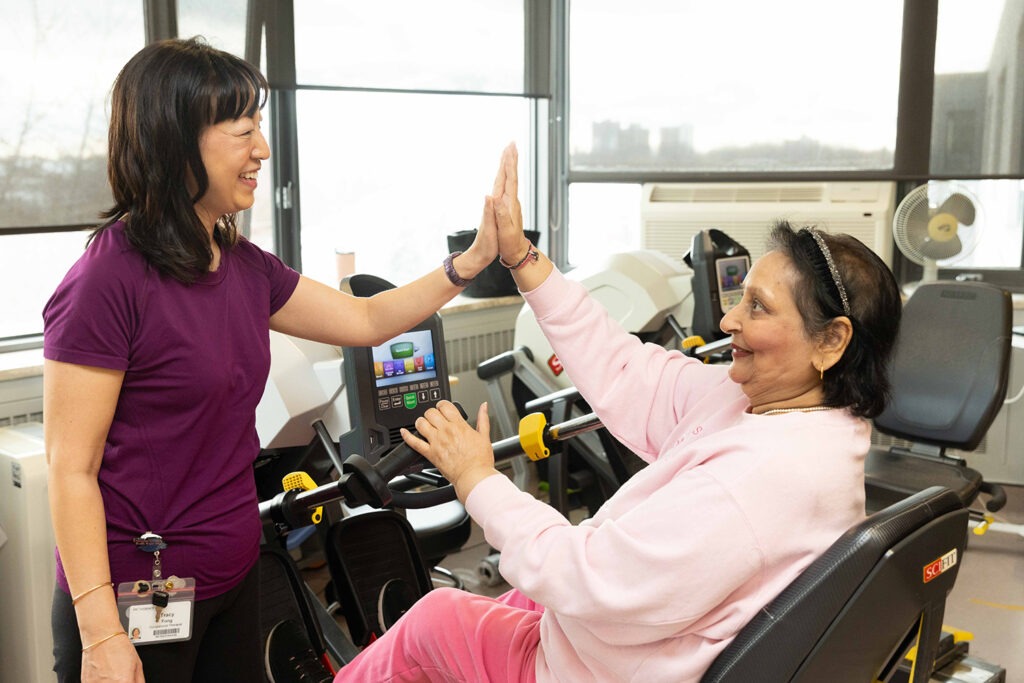
The excitement in the air is palpable as Madhu Suri completes her physiotherapy session. She will be discharged back home tomorrow after three weeks on Providence Healthcare’s Orthopaedic and Amputee Rehabilitation unit for a hip fracture.
“At first, stairs were very challenging. I couldn’t do even three stairs. I would feel dizzy,” says Suri. “Yesterday and today, I did a whole 15 stairs.”
Hip fractures are a growing health concern in Canada. In 2023-24, there were 149 osteoporosis-related hip fractures per 100,000 Canadians over the age of 40, according to the Canadian Chronic Disease Surveillance System. A hip fracture is a serious medical event for an older person, with only one third of patients returning to the same function they had before their injury and around 21-25 per cent of patients dying in the year following their injury.
Earlier this winter, Suri was preparing for a visit from her personal support worker (PSW) and, as she walked into another room with her walker, her foot twisted to the side and she experienced excruciating pain.
“I couldn’t stand properly. My knee was starting to shake,” recounts Suri. “I was praying for my PSW to arrive soon.”
Enjoying this story? Sign up for the Unity Health Toronto newsletter, a monthly update on the latest news, stories, patient voices and research emailed directly to subscribers.
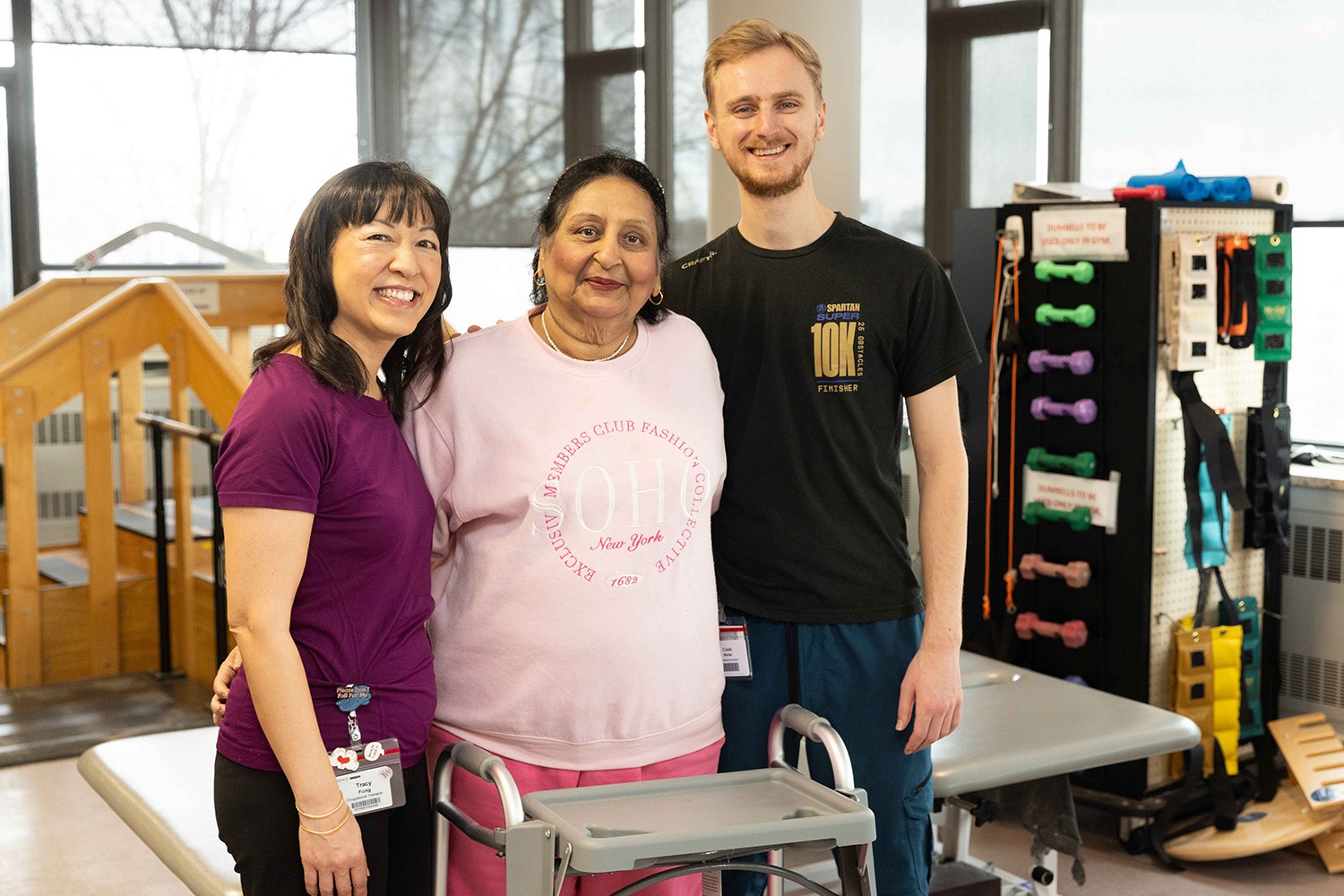
When the PSW arrived, she helped Madhu sit down and they called an ambulance. After surgery and a couple weeks in acute care at another hospital, Madhu was transferred to Providence, where she met Caleb Weller, physiotherapist (PT), and Tracy Fong, occupational therapist (OT).
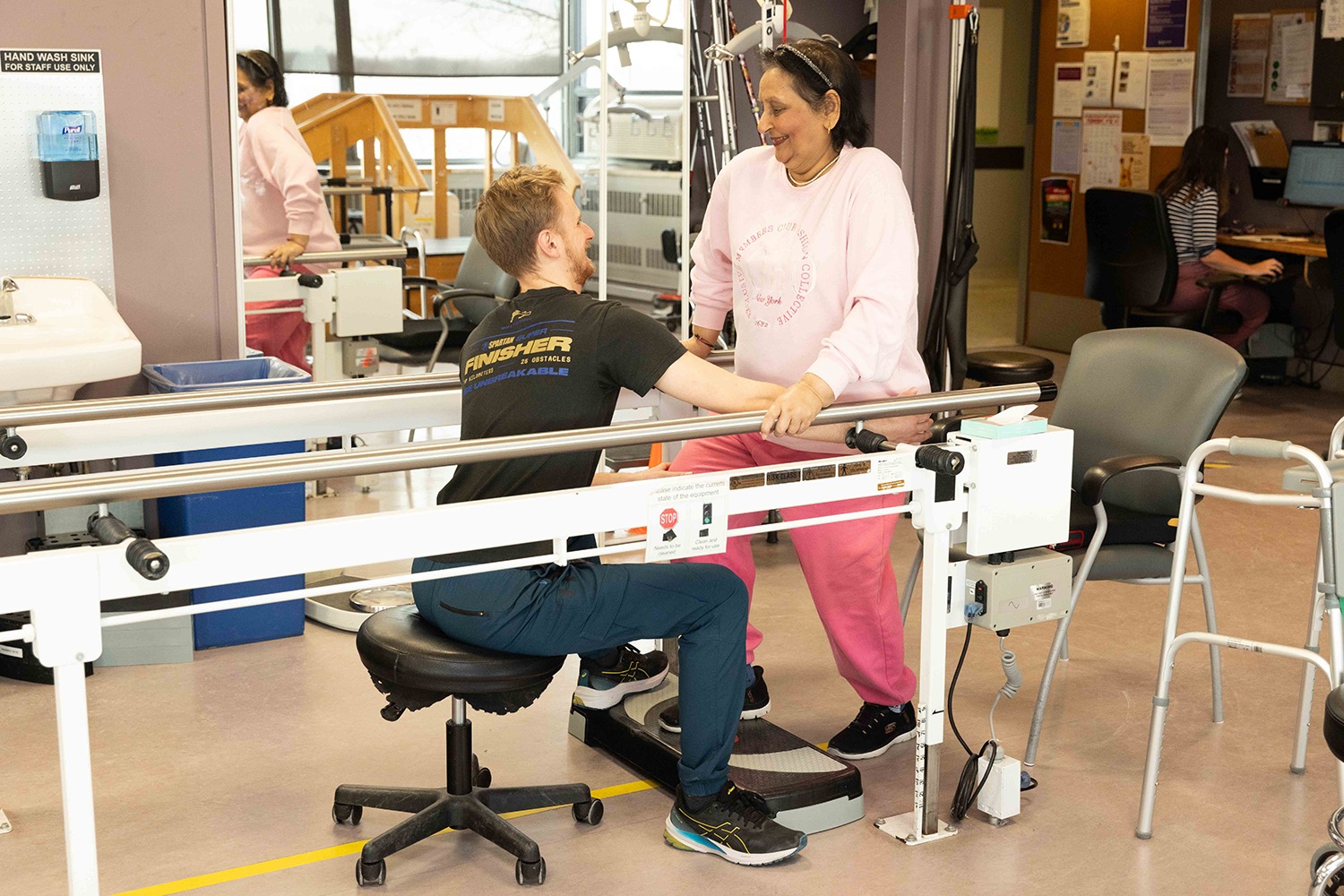
“These two are amazing people,” says Suri. “They give you life. I don’t know how they do it—they have magic hands.”
Weller finished his schooling in August 2025 and began working at Providence the following October.
“Once people find a rehab job, they usually stay in it for a very long time,” says Weller. “I got really lucky getting this role straightaway.”
Fong has been at Providence for nearly 20 years and was motivated to become an OT by her grandmother, who experienced a fall, a broken hip and ultimately an amputation.
“She lived until she was 96 and was independent until the day she passed,” recalls Fong. “I think a large part of that was the OT that set her up at home and got her going.”
Weller and Fong often work with hip fracture patients, as there are usually anywhere from 15 to 20 of these patients on their 70-bed unit at a time. They work closely with the interdisciplinary team – doctors, nurses, social workers, recreation therapists and more – to build out a holistic rehabilitation plan that helps the patient achieve their goals for independence.
Research on rehabilitation at Providence
With the growing prevalence of hip fractures among older Canadians and high demand for inpatient rehabilitation, research at Providence is helping to inform how programs tailor their care to the needs of patients.
A recently published study led by Dr. Shane Journeay was conducted at Providence. It looked at how a hip fracture patients’ body mass index (BMI) – whether they are over, under or normal weight – influences changes to their Functional Independence Measure (FIM) score and length of stay in hospital. An FIM score is a recognized standard that assesses 18 motor and cognitive skills to provide an overall evaluation of a patient’s independence level. It is used on admission and throughout the rehabilitation journey to help track a patient’s improvement.
The study found that the impact of BMI to changes in FIM score and length of stay was dependent upon the patient’s FIM score at admission. For example, if a hip fracture patient had a low FIM score at admission and a high BMI, they could experience longer stays and slightly more functional gains during their inpatient rehab.
Ultimately, the study found that BMI does not significantly affect rehabilitation outcomes. The data suggested other factors had a stronger influence. Older age and dementia were both associated with fewer functional gains during hip fracture rehabilitation; being male and living alone before the hip fracture were both associated with longer hospital stays.
“This research is important because we need to understand what factors impact someone’s recovery so that we can clinically adjust to help patients maximize their recovery,” says Dr. Ashley Verduyn, chief and director of Medical Affairs at Providence.
“It’s a beautiful thing to see people regain their confidence and their outlook on life as their function and mobility improves,” adds Verduyn.
Going home
Weller and Fong worked with the interdisciplinary team to track Suri’s FIM score throughout her care at Providence. They both highlight how her positivity and determination fueled her recovery.
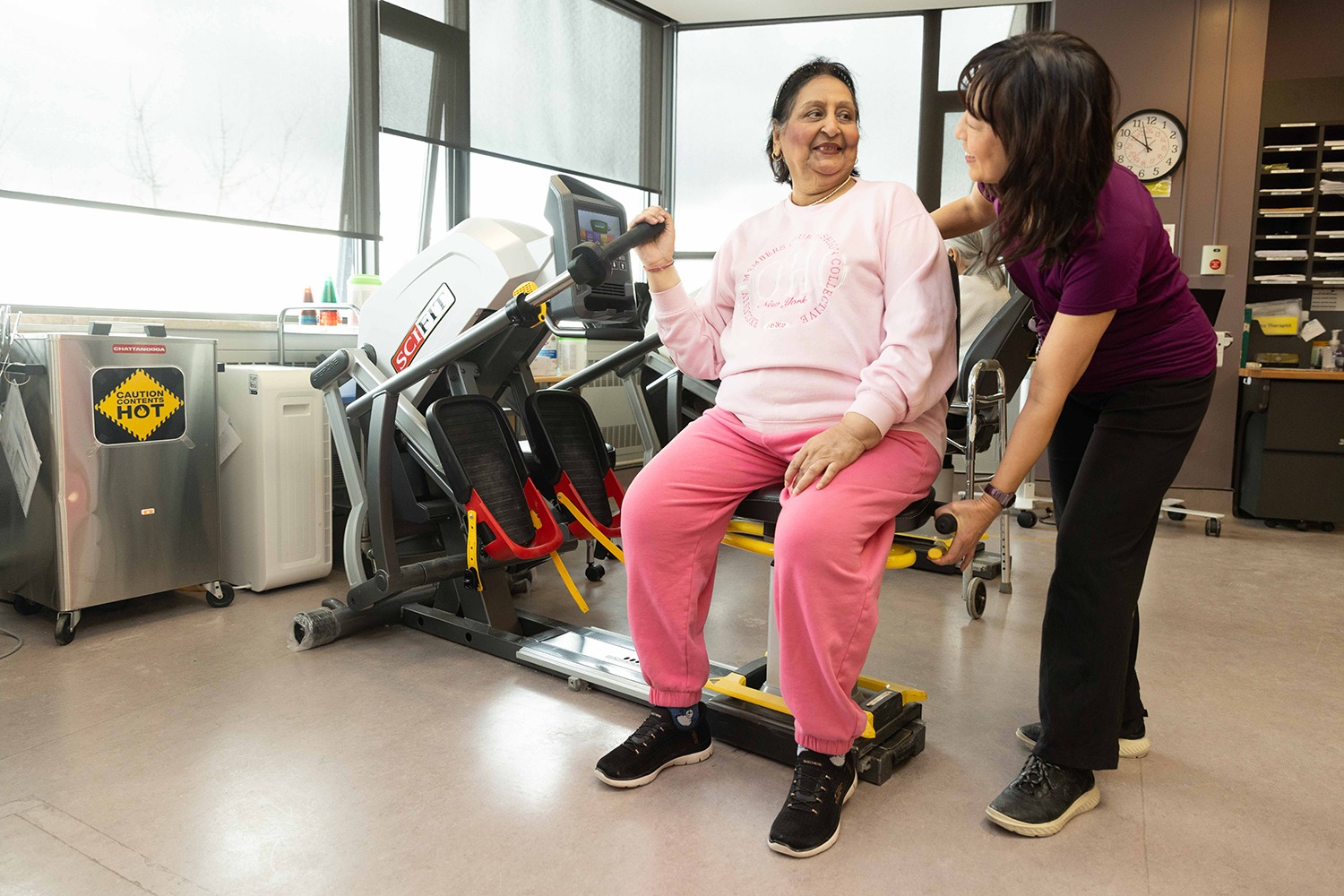
“Madhu very actively participates in her care and problem solving,” says Weller. Like Suri, he describes her feeling dizzy when climbing stairs. Suri thought it might be the frequent turning when using the three-step rehab stairs in the therapy gym that was making her dizzy. So, they moved to the hospital stairwell where she didn’t have to turn as much.
“She was so motivated,” says Fong. “We gave her the tools, but she really ran with it and used them to her benefit.”
“She is big on celebrating successes – her own successes and the successes of her roommates and others on the unit too,” says Weller. “She cheers on everyone.”
Suri is excited to get back to the activities she loves most on her return home. She’s particularly looking forward to seeing the members of the seniors’ club she helps run.
“I’ve been planning all the time—sitting here in hospital. I never stopped,” says Suri. “Physically, I can’t do much, so I put the program together instead. I want to help. I want to see smiles on everyone’s face.”
By Robyn Cox
Photos by Katie Cooper