REACT brings care into the community for people with complex mental health and substance use needs
A new program at St. Michael’s Hospital is making consistent care more accessible for people living with severe mental illness and substance use disorders.
The Recovery Empowerment Assertive Community Treatment Team (REACT) is working to address the challenges that patients face when they need care from more than one specialty or program.
Developed through Unity Health Toronto’s partnership with the City of Toronto and as part of the Downtown Toronto Homelessness and Addiction Recovery Treatment (HART) Hub, the program brings an interdisciplinary team directly into the community, meeting clients where they are to ensure no opportunity for connection is lost.
REACT is among the first concurrent disorders assertive community treatment teams in Ontario, combining psychiatric care, substance use treatment and intensive community outreach within a single interdisciplinary program.
“The most important and urgent piece is to make sure that clients receive care,” says Dr. Vitor Soares Tardelli, a psychiatrist at St. Michael’s Hospital. “The fact that they cannot show up to the appointment must not preclude them from receiving proper health care. That’s what we’re there for.”
Enjoying this story? Sign up for the Unity Health Toronto newsletter, a monthly update on the latest news, stories, patient voices and research emailed directly to subscribers.
REACT’s model focuses on making care not only available, but also accessible and easier to navigate. For clients who have difficulty using traditional appointment-based services, expectations like travelling to a clinic or attending a scheduled appointment can become barriers to care. By bringing different types of care together through one team, REACT creates a clearer, more seamless pathway to the supports clients need, without requiring them to navigate multiple programs on their own.
“When we meet people in the community, we better understand who they are from a holistic standpoint,” says Ipshitha Anand, clinical manager, Addictions & Withdrawal Management Services at St. Michael’s Hospital and REACT program manager. “We really understand the factors impacting either their care or their ability to achieve their goals.”
That understanding shapes the care plan and clarifies which barriers are making care hard to sustain. It might be a missing health card, an unsafe place to stay, or not having reliable transportation to appointments.
The program brings together clinicians and community-based workers from several disciplines so clients do not have to repeatedly restart their care in different parts of the system.
Dr. Karen Shin, chief of psychiatry at St. Michael’s Hospital, says that integration is critical for people whose mental health and substance use needs are often addressed separately. For clients, it can mean fewer handoffs and more continuity with a team that already knows their story.
“When you’re lacking all the care components, then you’re relying on referring people and connecting them again and again to different services,” Shin says. “Anytime you need to make an extra connection, it’s a chance for it to fall through. REACT pulls in services to meet the needs of the patient as opposed to pushing the patient to different places and breaking up care.”
Al-Imran Shermohammed, operations leader for REACT at St. Michael’s Hospital, says many people coming to REACT have been “overlooked” by existing systems, even while living with several urgent needs at once.
Jenna Richards, a clinical nurse specialist in the Mental Health Program, supported REACT from development through launch. She helped coordinate the operational, clinical and administrative work needed to establish the new team, including referral processes, staffing, onboarding, training and workflows.
Richards says that long-term support is central to REACT’s recovery model because it gives the team time to build trust with clients whose previous experiences with health care and social services may have made them hesitant to engage.
Tardelli recalls one client who had recently been discharged from hospital. A REACT worker learned the client liked basketball and met them out on the court, using a familiar activity to create comfort and safety for the next conversation to happen.
This flexibility is part of REACT’s approach. The program does not require people to be abstinent or fully ready for treatment before receiving support. Instead, the team begins with small goals and works from there.
For Anand, those small goals matter because they can lead to larger changes. Success may be a client seeking out the team on their own, beginning to talk about work or relationships, reconnecting with community supports or becoming, as she puts it, “an independent leader in their own lives.”
That is also why referrals matter. REACT is intended for people whose care has been difficult to sustain and who may benefit from a team that can work across mental health, substance use and community support. Calling attention to the program can help providers, community partners and hospital teams recognize when someone may need a different kind of connection.
REACT is still growing, with plans to move toward a seven-day service model as the caseload expands. Already, staff describe clients beginning to re-engage with services, connect to supportive housing and receive care in places where a traditional appointment might not have worked.
Referrals can be made through participating Downtown HART Hub partners for individuals experiencing both severe mental illness and substance use challenges who would benefit from intensive community-based support.
By Hannah Nickle
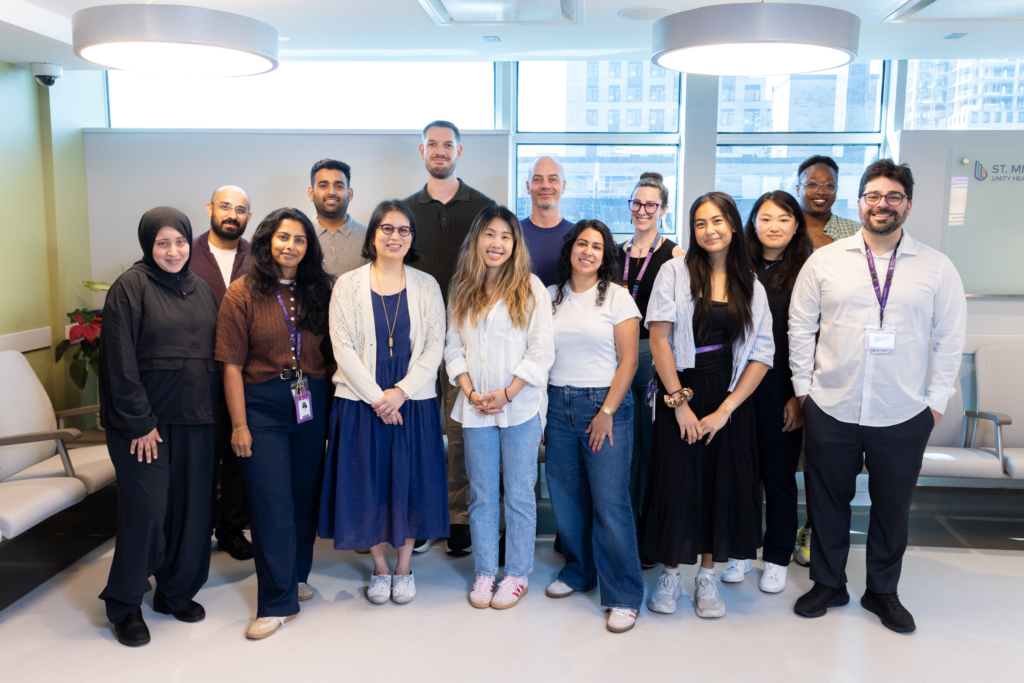
Photo by Katie Cooper