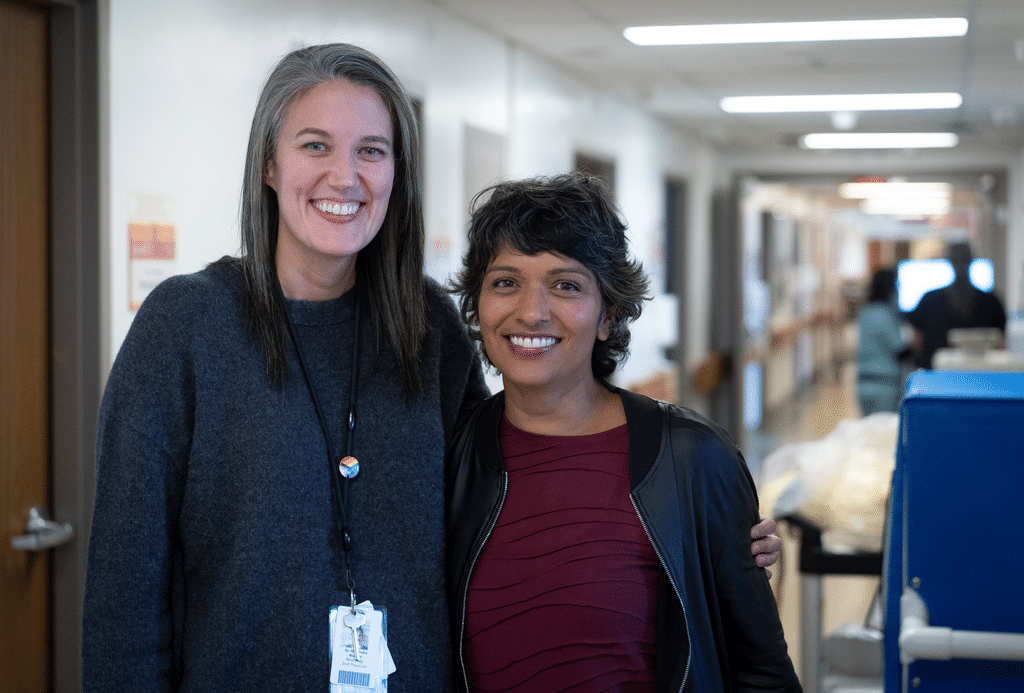
“I don’t know how to be angry anymore”: broadcast journalist Reshmi Nair finds new perspective after stroke
In February 2026, Reshmi Nair was at her East York home when, without warning, the left side of her body stopped working. The 44-year-old former CBC and CTV broadcast journalist had spent the morning out with a friend. After returning home, greeting her dog and sitting down on the couch, she suddenly lost the ability to move and speak. Her thoughts remained clear, and she immediately understood what was happening.
Nair recognised the signs of stroke through her familiarity with the FAST acronym, which helps people identify common stroke symptoms, including facial drooping, arm weakness and speech difficulties, while reinforcing that every minute counts.
“I knew it was a stroke because I know the FAST symptoms,” says Nair. “I was talking in my head the whole time. Everything sounded right. I just couldn’t get it out. My body just wasn’t working.”
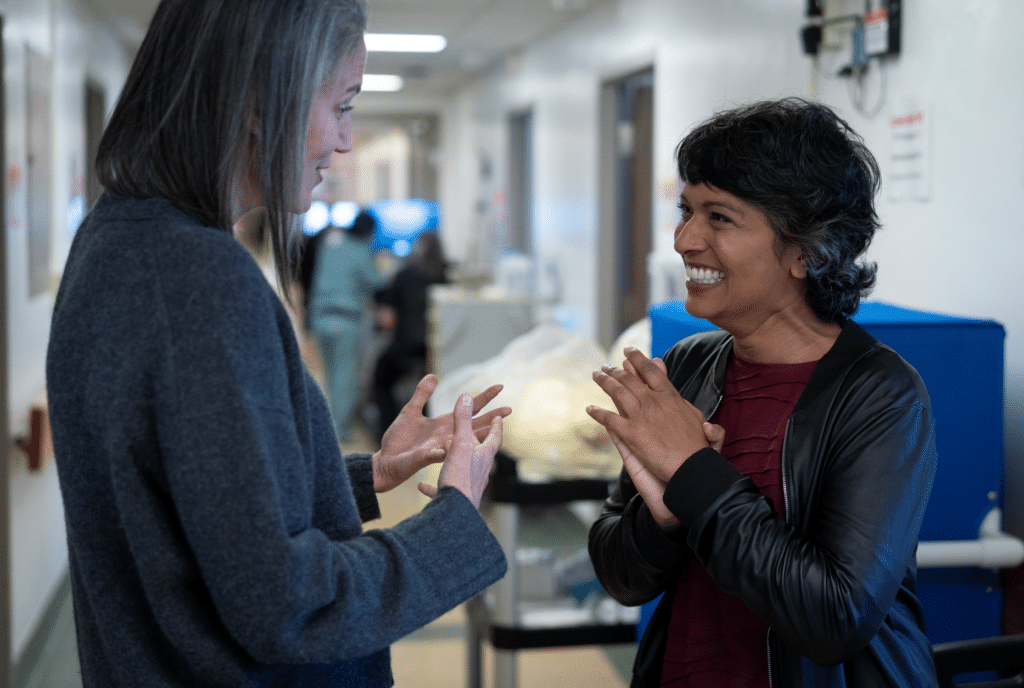
For Dr. Alexandra Muccilli, neurologist and medical director of the Stroke Program at St. Michael’s Hospital, Nair’s experience serves as a reminder that stroke does not discriminate by age.
“There is a common misconception that strokes only happen to older people or those with significant medical problems,” says Muccilli. “But stroke can happen to anyone, including young, otherwise healthy adults. That’s why it’s so important for everyone to recognize the signs.”
Enjoying this story? Sign up for the Unity Health Toronto newsletter, a monthly update on the latest news, stories, patient voices and research emailed directly to subscribers
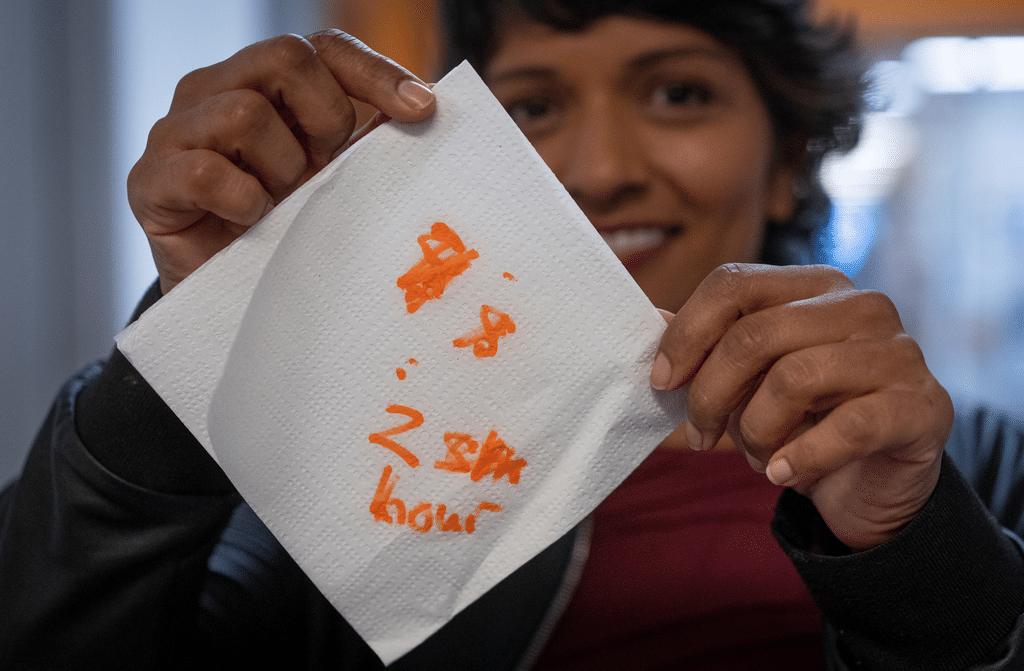
About two hours later, Nair’s landlord stopped by, recognized something was wrong and called 911. Despite being unable to speak and struggling to move, Nair found a way to communicate a detail that would prove critical to her care.
“She managed to write down when her symptoms had started, even though she couldn’t speak,” says Muccilli. “Knowing when a stroke began is incredibly important because some of our most effective treatments are time-sensitive.”
When Nair arrived at St. Michael’s Hospital, she had profound weakness and severe difficulty communicating.
“She had suffered a devastating stroke. She was essentially paralyzed and unable to speak,” says Muccilli. “But because we knew when her symptoms began, we were able to move quickly and offer treatment that could dramatically improve her chances of recovery.”
Nair received clot-dissolving medication, followed by a thrombectomy, a procedure in which specialists remove a blood clot from an artery in the brain to restore blood flow.
She was subsequently cared for in the intensive care unit and inpatient stroke unit at St. Michael’s Hospital.
“Stroke care has changed enormously over the past two decades,” explains Muccilli. “We now have treatments that can prevent permanent disability, but getting patients to the right hospital and delivering those treatments quickly is critical. Reshmi’s experience is a powerful example of why every minute matters.”
After two weeks at St. Michael’s Hospital, Nair was stable and ready for rehabilitation. She was transferred to Hennick Bridgepoint Hospital, where a coordinated transition from acute stroke care to rehabilitation allowed her recovery to continue with minimal interruption. For the following two months, physiotherapy, occupational therapy and speech therapy became part of her daily routine before she transitioned to outpatient rehabilitation.
For someone whose career has been built on communication, losing her ability to speak was particularly difficult.
“Reshmi had spent her professional life communicating with people, and suddenly she couldn’t express herself,” says Muccilli. “When I first met her, she had profound neurological deficits. To see how far she’s come in just a matter of months has been remarkable.”
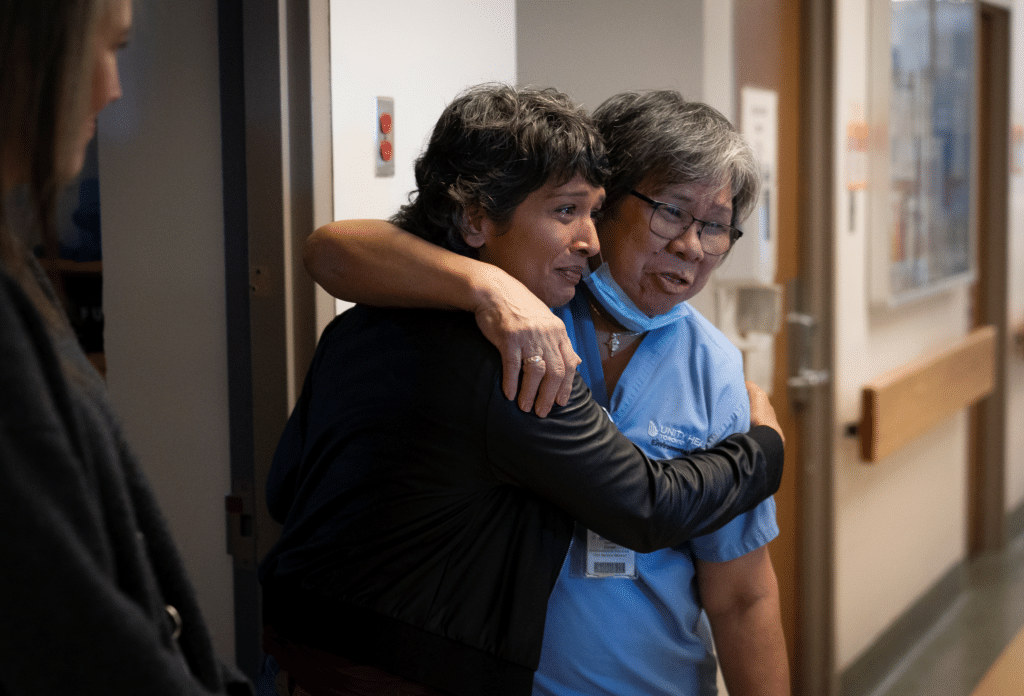
Nair approached rehabilitation like a full-time job, crediting the health-care professionals at St. Michael’s Hospital and Hennick Bridgepoint Hospital who supported her recovery.
“All the frontline workers were so amazing because they care so much about the patients,” says Nair. “And I know that’s why I’m here. All the people helping me were so amazing. I can’t thank them enough for everything.”
Although Nair was alone when her stroke occurred, she was surrounded by support throughout her recovery. Her mother, brother, child and close friends became an essential part of her rehabilitation journey. She also thinks of her late father and how proud he would have been to see the family come together.
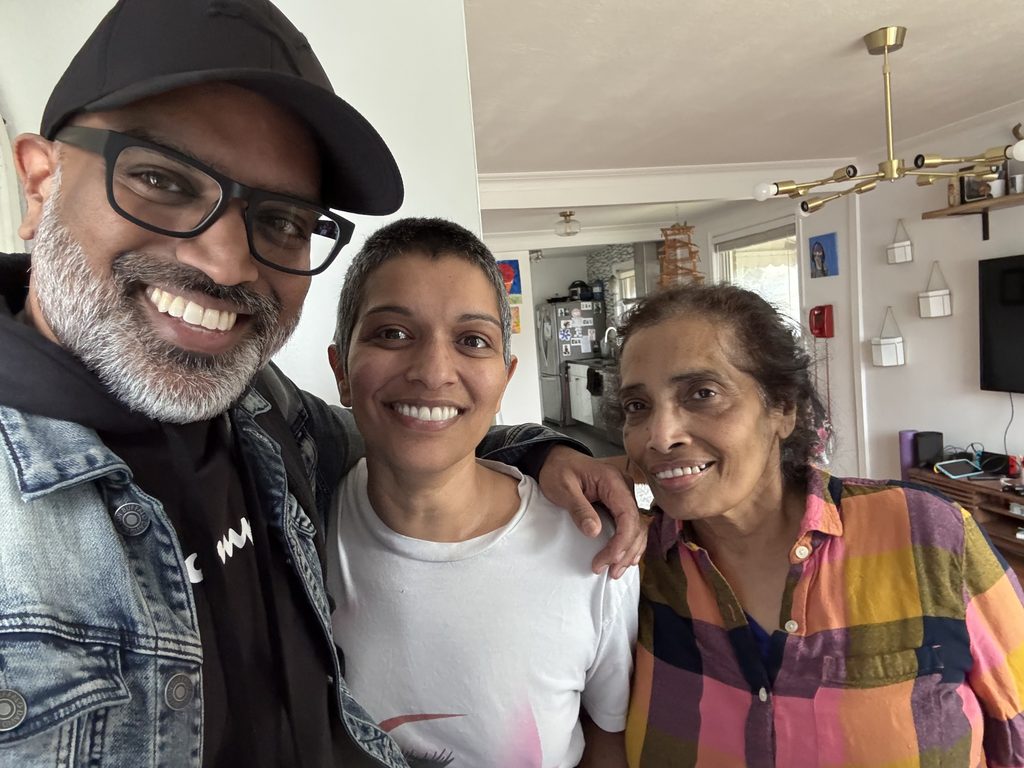
Eight months after her stroke, Nair is living independently and driving again, milestones that once seemed far from certain.
Being able to drive mattered because it changed what Nair could do for herself. After leaving the hospital, even getting groceries depended on someone else or a much longer trip by transit. Driving gave her back time, choice and the ability to leave home on her own terms.
“What’s particularly rewarding is seeing patients regain the independence that a stroke can take away in an instant,” says Muccilli. “Reshmi has worked incredibly hard to get to where she is today. Her recovery reflects not only the treatments she received, but also months of rehabilitation, determination and support from the people around her.”
Nair remains uncertain whether she will return to live broadcasting. While her future career may look different, she is focused on how the experience has changed her perspective on life.
“Because I was a live broadcast journalist, I was stressed out every day. Now I have more patience, and I don’t talk as much,” says Nair. “When I’m with my friends, everyone else talks and I just listen. Sometimes I don’t agree with them, but that’s OK. I don’t have to do anything about it. I don’t have to speak. I’m just getting more perspective.”
Her recovery has been about more than regaining the ability to walk, speak and live independently. It has also been about adjusting to a different pace of life and finding meaning in an experience that changed everything.
“I’m not angry about anything,” says Nair. “I don’t know how to be angry anymore.”
By Hannah Nickle
Photos by Kevin Van Paassen