At St. Joseph’s Health Centre, music is a universal language of comfort and connection

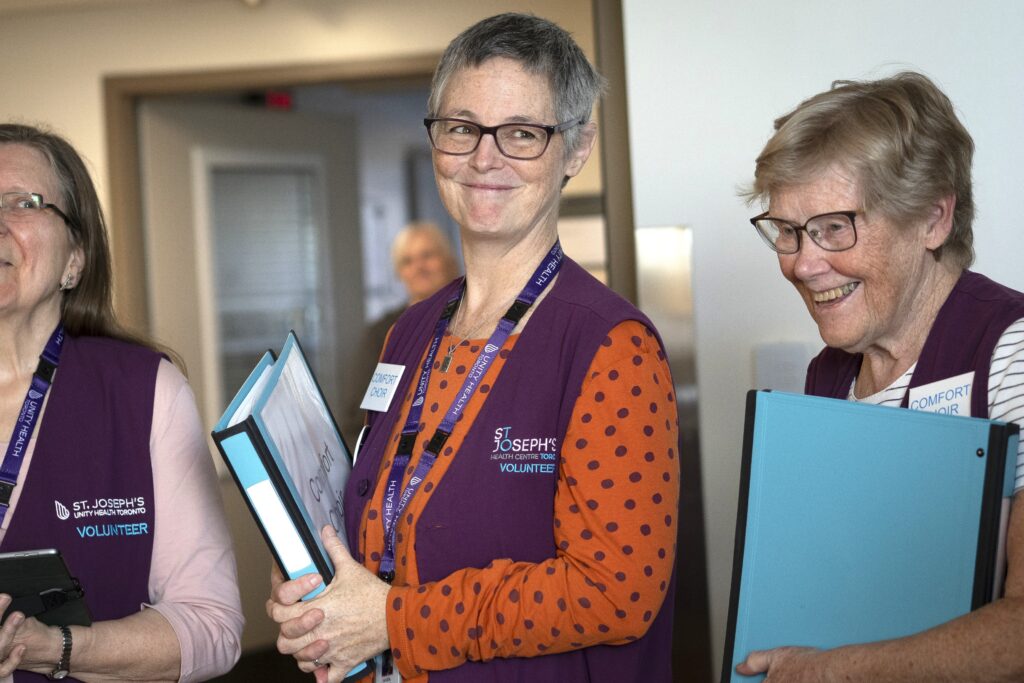
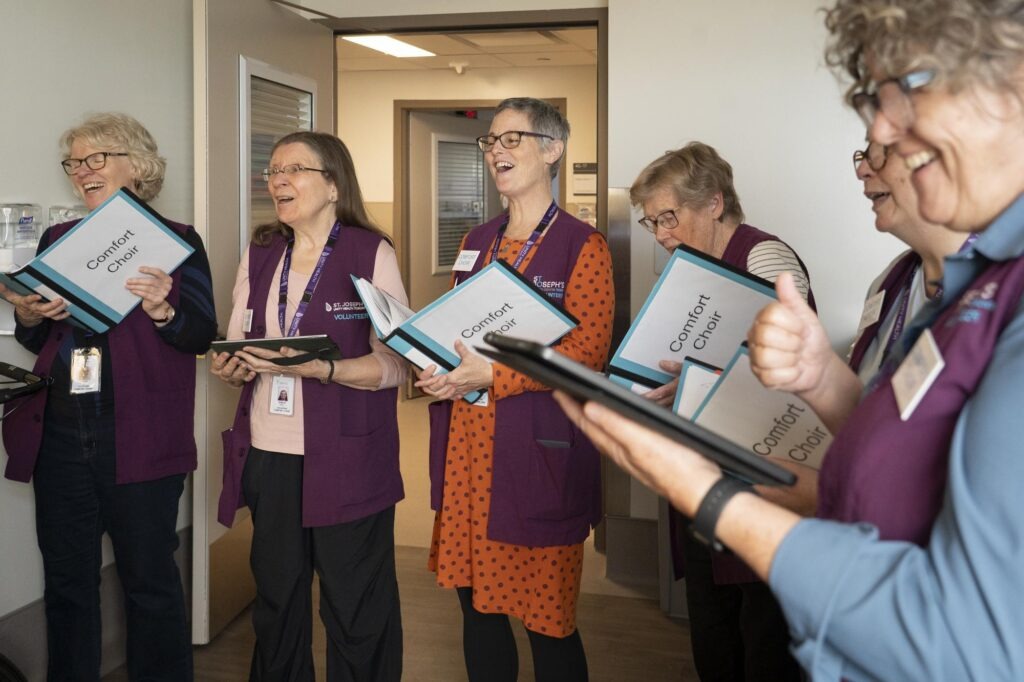
For Wanda Bussiere, a volunteer on the Palliative Care Unit at St. Joseph’s Health Centre, music has been a source of healing since she was a child. Recognizing how it can provide comfort to individuals, she introduced a volunteer led Comfort Choir in partnership with the Palliative Care unit, to help bring moments of joy and respite to patients and their families.
Bussiere’s passion for supporting patients is rooted in her personal experience. Years ago, she cared for her stepfather during his final days at home. As a nurse, she was well equipped to support his physical needs, but the experience also gave her a firsthand understanding of the emotional support patients and families need at the end of life.
“There came a point in his care when we knew he would pass soon, so I called my mom and sister to his bedside, and we sang to him as he took his last breath,” recalls Bussiere.
The experience stayed with her long after her stepfather’s passing. Singing together brought comfort to her family during a difficult time and inspired her to find ways to offer that same sense of support to others receiving palliative care.
Enjoying this story? Sign up for the Unity Health Toronto newsletter, a monthly update on the latest news, stories, patient voices and research emailed directly to subscribers.
In early 2025, Bussiere came across a Toronto Star article about the Comfort Choir at Michael Garron Hospital. Seeing the program’s positive impact, she connected with the team behind it and began volunteering with them to explore how a similar model could be introduced at St. Joseph’s.
“Volunteer Services has been a tremendous supporter of the palliative care program for many years,” says Gresham Kimm, Clinical Manager, Rehabilitation and Palliative Care. “Our program jumped at the chance to support this initiative, knowing it would be led by Wanda and supported by the volunteer team.”
Several volunteers who participate in the Comfort Choir at Michael Garron Hospital also volunteer at St. Joseph’s, bringing valuable insights to the program.
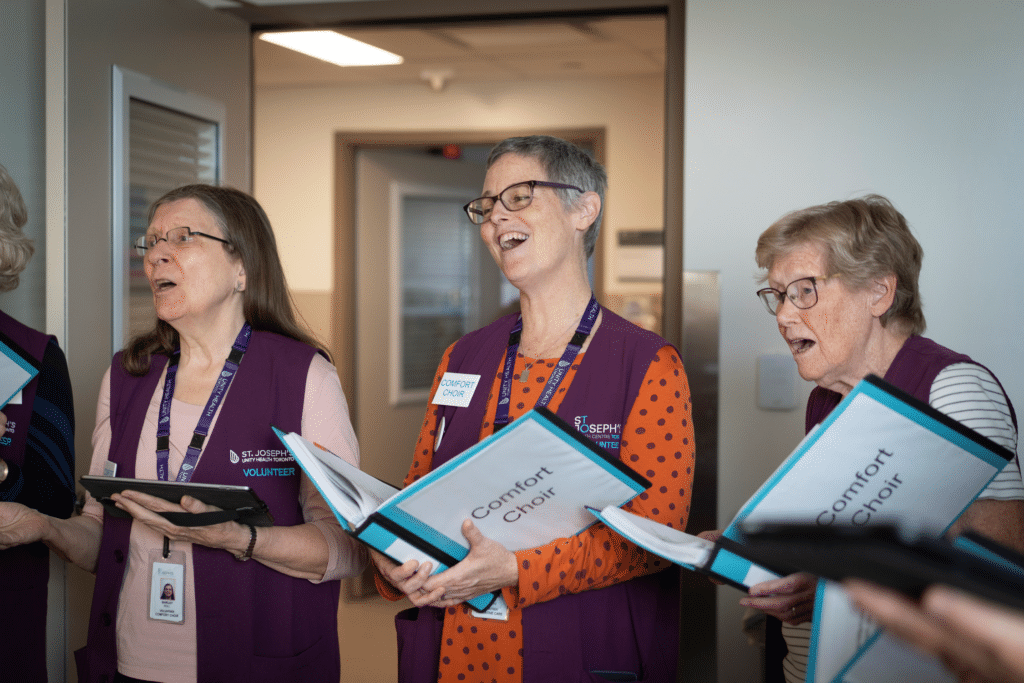
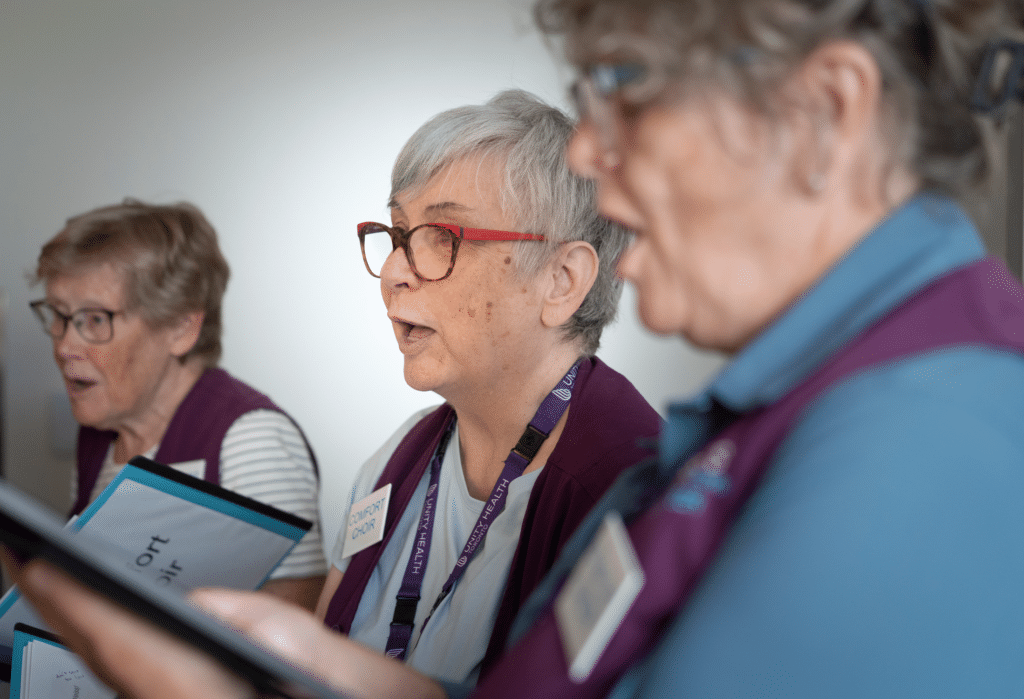
“We are a small choir, not a performance choir,” says Bussiere. “Our aim is to provide comfort and help ease pain through music. We strive to connect with patients and families, treating everyone with compassion and dignity.”
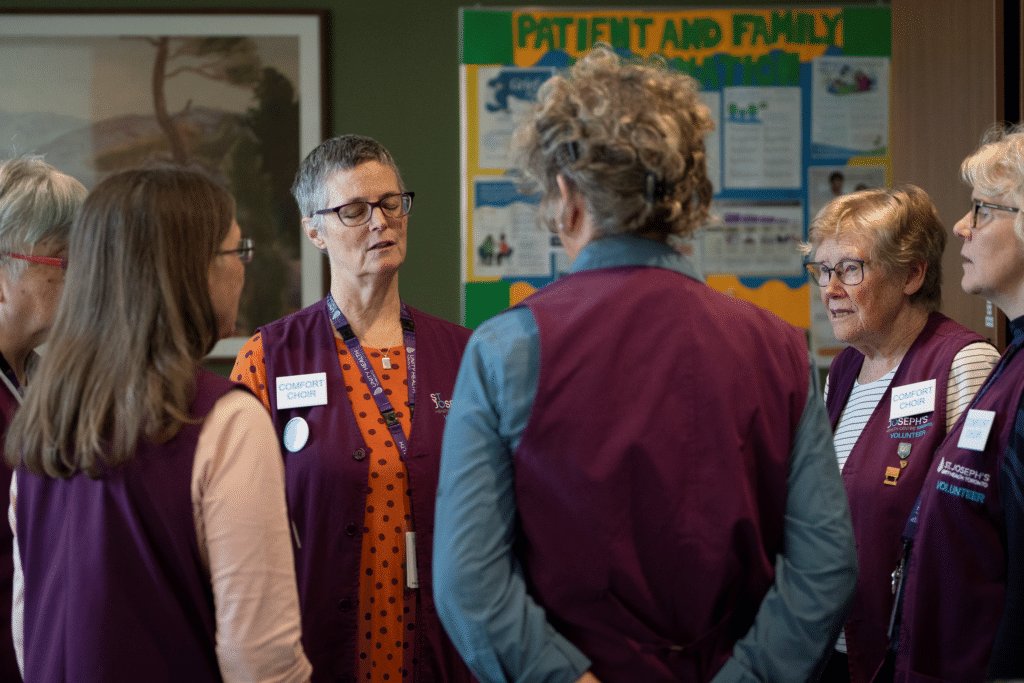
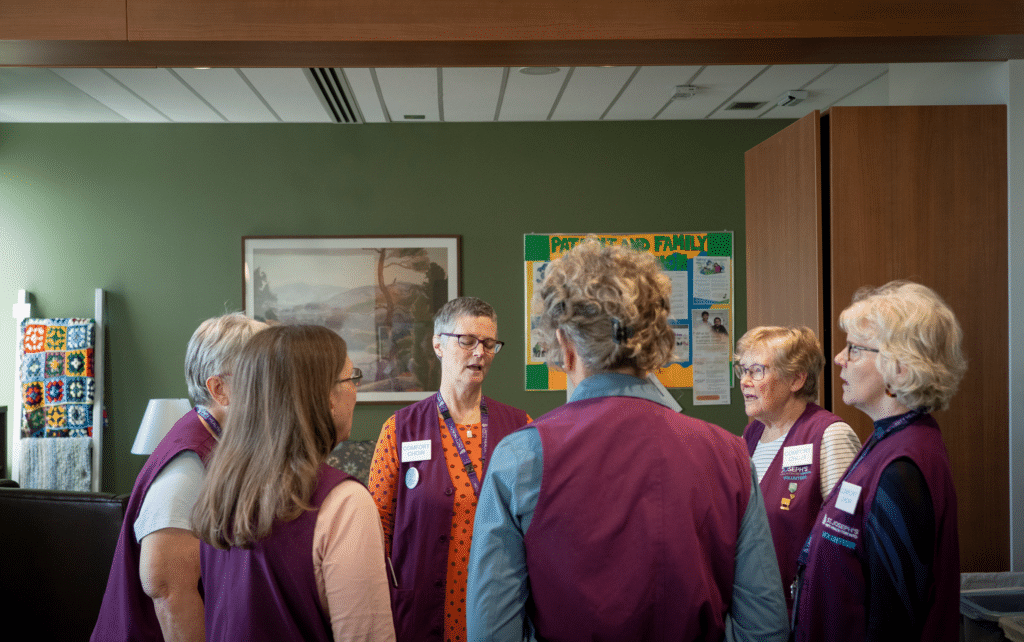
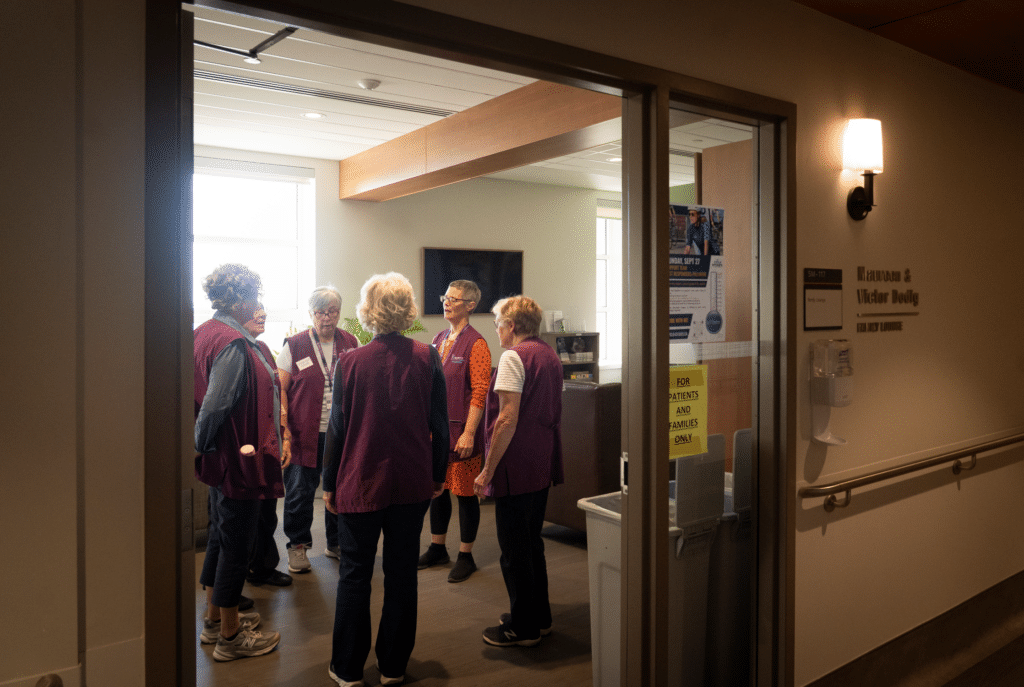
Before each visit, the Comfort Choir’s volunteers gather in a quiet space to practice and prepare. Together they reflect on their purpose and sing a meditative song before meeting patients and families. Since many of the volunteers have a special connection to the palliative care unit, it helps them to feel grounded in the work that they are doing. “Some feelings of sadness come up because a patient may remind them of a person they know,” says Bussiere.
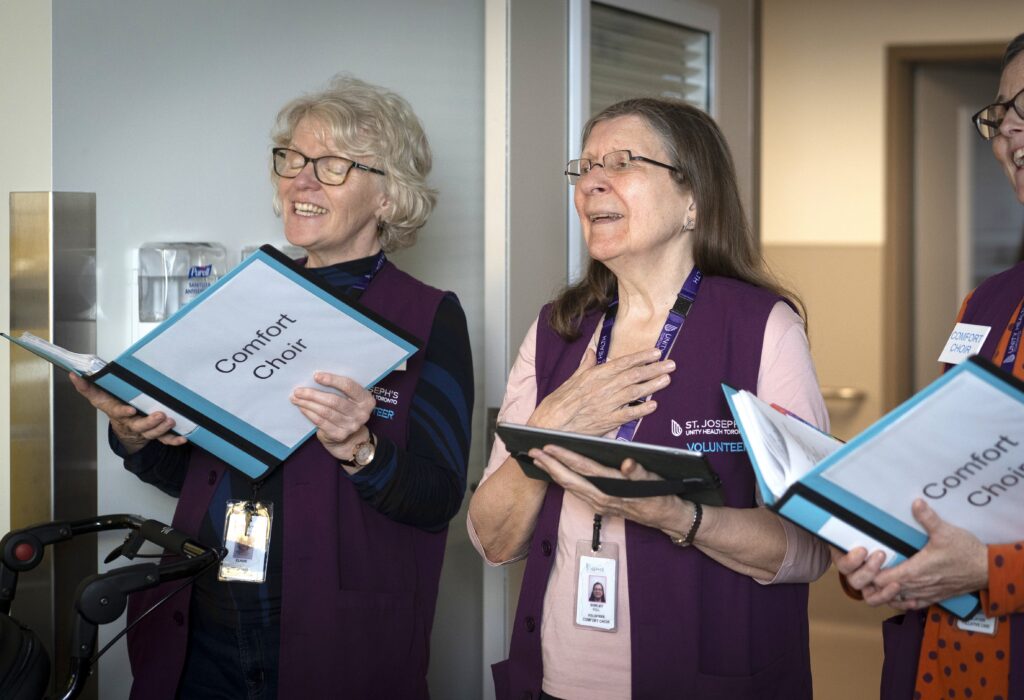
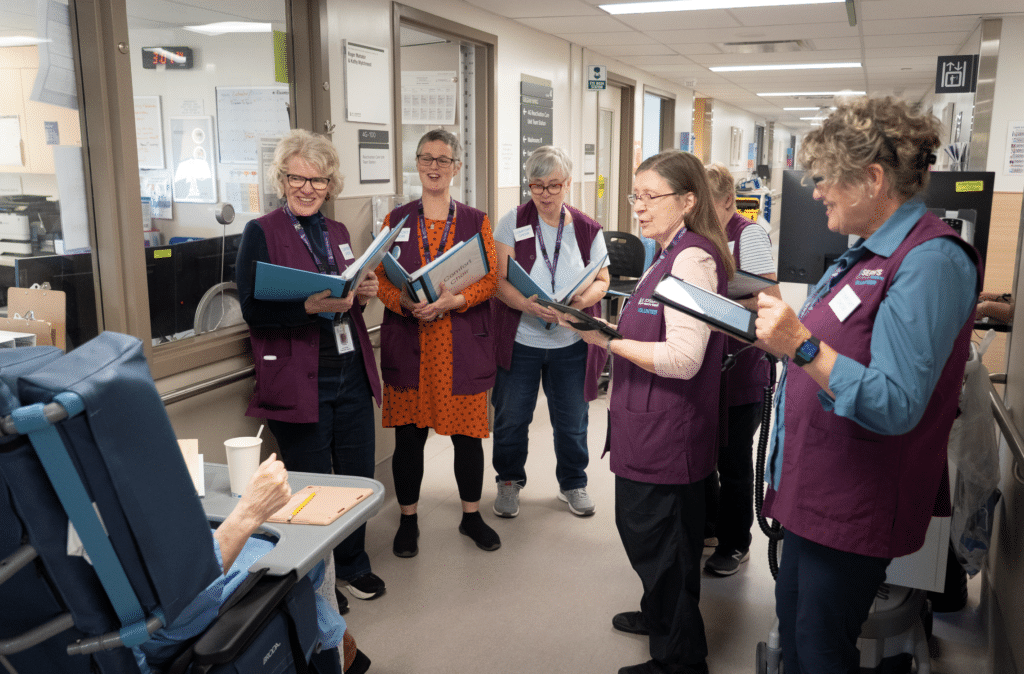
The volunteers then walk from room to room, offering music to patients and their loved ones. “Usually, one person knocks on the door and asks the patient or family member if they would like to hear a couple of songs,” says Bussiere. “That person comes back to the choir with their preferred genre, and we choose what to sing.”
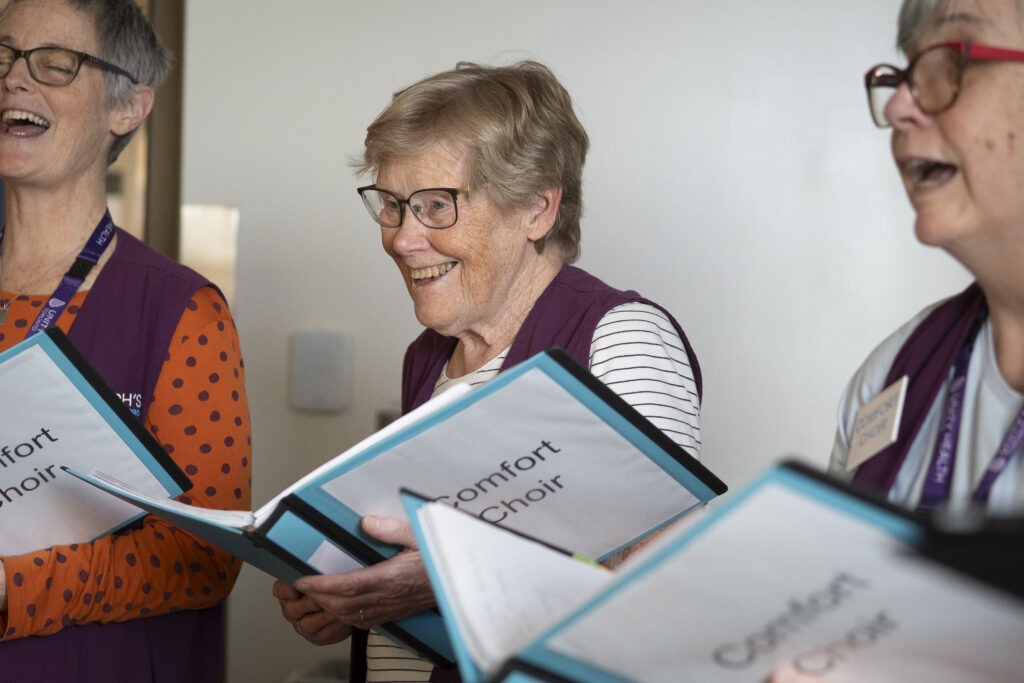
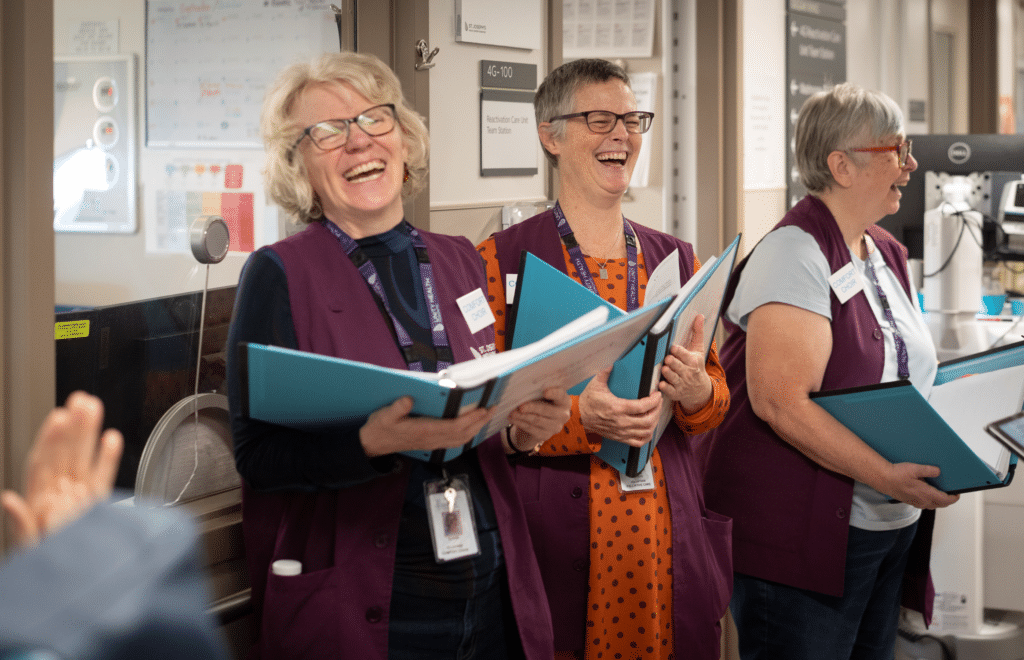
The choir’s binder contains more than 100 songs, ranging from gospel to modern pop, with requests welcomed from patients. Bussiere recalls one patient who hadn’t smiled and was very serious when the choir first arrived. “During one of our songs, we made a mistake, and a huge smile appeared on his face. It was a moment of shared humanity, and it connected us in a special way,” she says.
For families facing the end of life, Kimm says moments like these can take on profound meaning. “These experiences are significant because they may be the last time a loved one speaks, smiles or engages with others,” he says. “Volunteers often recognize needs that a clinical approach alone may not address, then find creative ways to fill those gaps and support more holistic care. By welcoming their ideas, we strengthen our program and truly live Unity Health’s value of community.”
For the choir, being of service means sparking and nurturing moments of human connection when they matter most. “Music is a universal language,” says Bussiere. “It can be healing, ease pain and bring people back to another time. Sometimes, it helps people connect with a memory, a loved one or even encourages patients who are older to sing along.”
More than anything, Bussiere hopes the choir can offer families the same comfort music brought to her own family years ago.
By Jade Vyfhuis
Photos by Kevin Van Paassen