How a St. Michael’s patient and his caregiver inspired their care team and community
BY OLIVIA LAVERY
VIDEO AND PHOTOS BY KEVIN VAN PAASSEN
Read parts one and two of Ben’s story.
The Trauma & Neurosurgery Inpatient Unit is where medicine meets humanity. On any given day, patients, families, physicians and staff face some of the most complex health challenges imaginable, forming bonds of trust, compassion and friendship that can be as vital as the care itself.
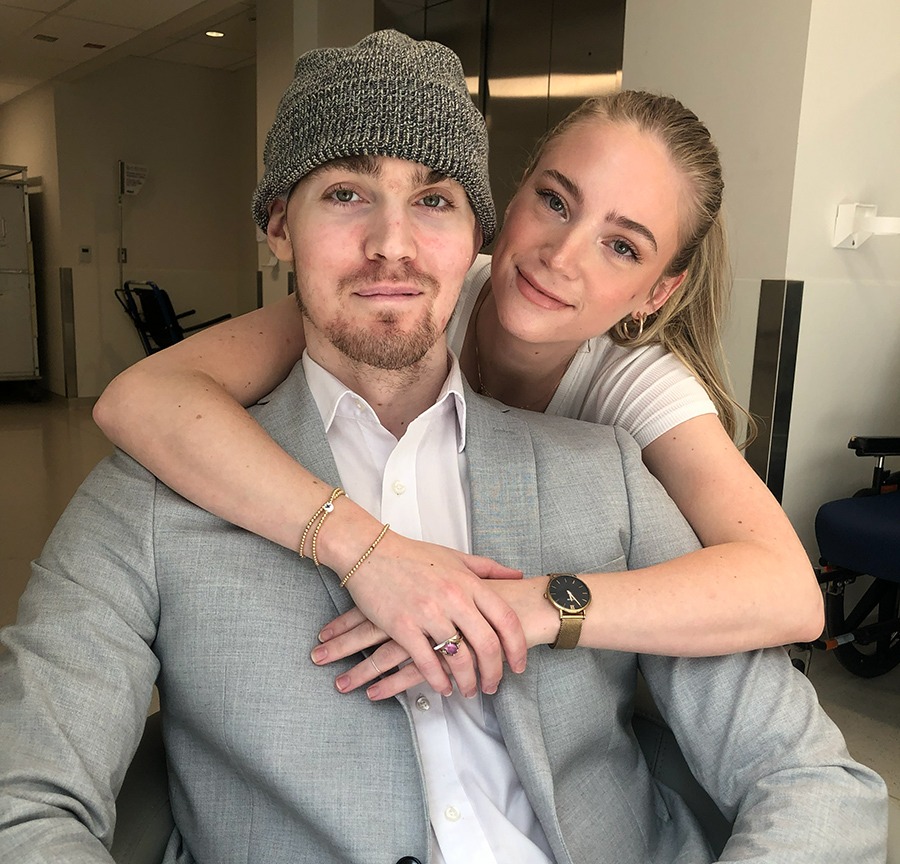
By the end of his time at St. Michael’s Hospital, Ben Finlan was up on his feet, walking, talking and moving with the help of his care team, family, and girlfriend Katherine Smith. It was a sharp contrast to how he had arrived years earlier in the aftermath of his traumatic brain injury.
Ben’s experience in the health care system wasn’t over. From St. Michael’s he would go to a rehabilitation hospital to continue building his strength, endurance and mobility.
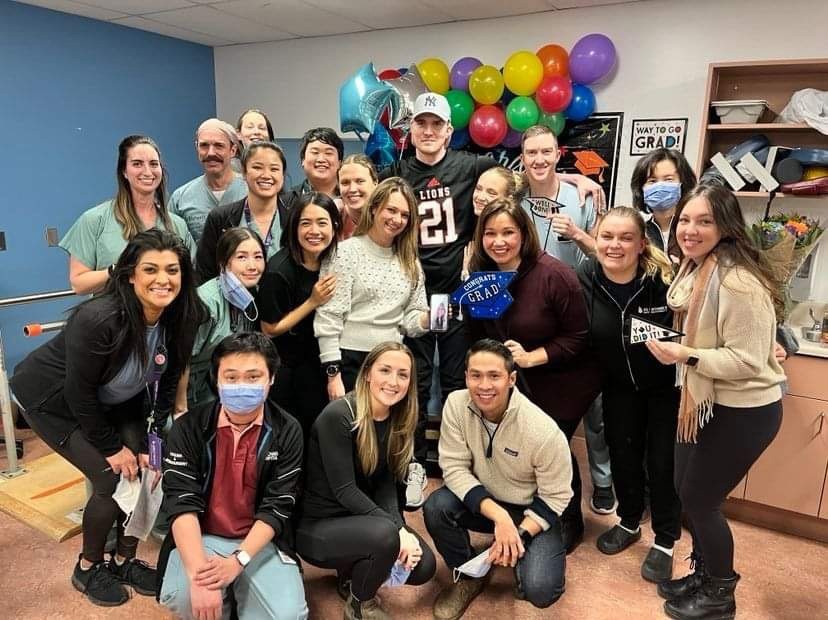
The team in the Trauma & Neurosurgery Inpatient Unit threw a goodbye party. There was cake and photos and many tears, but also smiles as Ben was able to walk into the room on his own two feet. Part of the protocol of the transfer between hospitals was that Ben had to be taken out on a stretcher. His care team lined the long hallway to the elevator to see him off.
“Being wheeled down the hallway and seeing everyone giving me high-fives, it was completely surreal,” Ben says.
Enjoying this story? Sign up for the Unity Health Toronto newsletter, a monthly update on the latest news, stories, patient voices and research emailed directly to subscribers.
Spencer McClung, one of the first nurses to meet Ben when he came to St. Michael’s, says Ben’s story is a reminder to not lose hope for patients even in tough situations.
“I think that in the acute care setting we see a lot of loss. We see a lot of despair. Patients can be so sick, can have such life-altering diagnoses, that it can be hard to picture them recovering,” says McClung. “Ben’s story is one that inspires us to keep hoping. He, Kath and his whole family are a testament to the power of hope and perseverance in the face of so much health-related adversity.”
The hope in a hospital is that patients will become well enough to leave and never come back. For the Trauma & Neurosurgery Inpatient Unit team, Ben and Katherine’s departure was a moment to reflect.
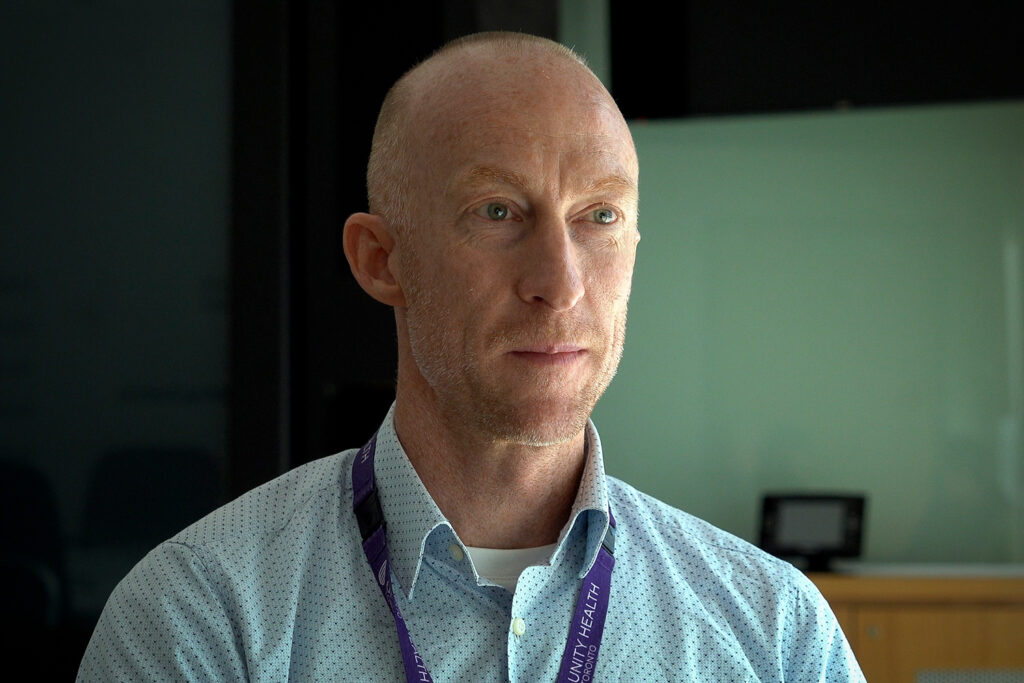
“I’ll certainly never forget Ben and Katherine,” says Dr. Blake Murphy, one of Ben’s plastic surgeons. “There aren’t many cases that exist like his.”
Dr. Najma Ahmed, Surgeon-and-Chief at St. Michael’s, and Interim Chief Medical Officer at Unity Health, says she is proud of all the teams involved in Ben’s care, from surgery, including pre and post-operative care, to critical care who “spared no effort to ensure the best possible outcome” for Ben.
Verity Tulloch, a physiotherapist, and Martha Miller, an occupational therapist, say that Ben’s case taught them the value of support systems. Without Katherine and her constant advocacy and calming presence, Ben might not have had the outcome he did.
Ben and Katherine are still in touch with many of the people on their care team. They’ve celebrated birthdays with their nurses, and had dinner with their surgeons. They’ve even carried on friendships with other patients and families they shared rooms with.
Ben and Katherine, and the team that supported them, brought life to their hospital rooms. They formed friendships and shared special moments, and their positivity and resolve shaped the space around them.
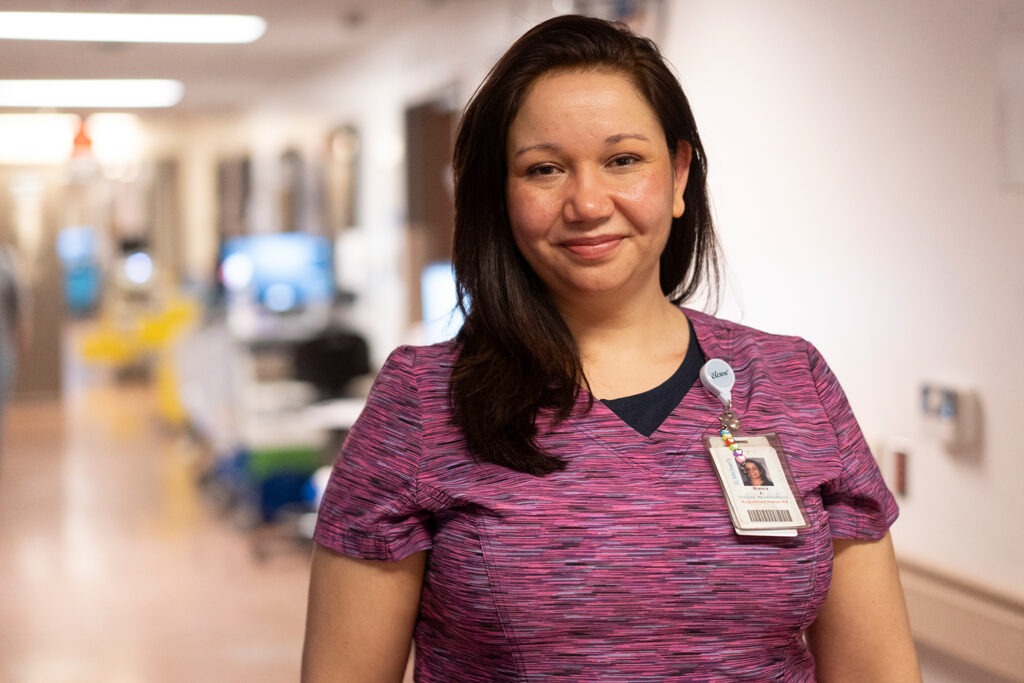
“Ben has taught me what true resilience looks like,” says Bianca Fetros, a nurse in the unit. “No matter what obstacle was thrown at him he has risen above it. Ben put in the hard work and had the determination to get better and he has made us all proud.”
From lived experience to real-world impact
For Katherine, leaving the hospital was a bittersweet moment. She had become close with many members of Ben’s care team, seeing them as advocates and confidantes during some of the most challenging moments of her life.
“They know me in a way that no one else really does,” she says. “I think they’ll always be part of my life.”
It’s strange, Katherine says, to explain the changes that happened in her own life during Ben’s time in the hospital. While he was unconscious, unable to communicate, or undergoing surgeries, she was starting a new job, moving into a new apartment, and navigating the already complicated experience of being a woman in her 20s. Throughout it all she was spending many hours a day at Ben’s bedside, doing everything from helping him eat to participating in his care team’s medical rounds.
Video: Ben’s story part III
Katherine recognized that the situation unfolding around her wasn’t just a personal experience, but a story that could be used to improve public understanding of traumatic brain injuries, caregiving, and the health care system. She took to social media to offer education and support for other patients, families and caregivers.
She joined caregiver support groups, but was decades younger than many of the other people. She felt isolated from her friends and peers, so she scoured the internet looking for stories similar to hers. When she found them, they gave her comfort and hope.
“I knew I wanted to be that for someone else,” she says.
Being a caregiver, she explains, means sometimes becoming a secondary character in your own life. It’s easy to lose yourself. Katherine hopes that her story and social media posts validate the feelings of other caregivers, and remind them that what they are doing is incredibly important.
Her efforts have been successful; she amassed hundreds of thousands of followers across her platforms, and regularly hears from other people seeking her insight and expertise. She continues to remain engaged with Unity Health Toronto and has become a Patient and Family Partner at St. Michael’s, helping to shape decision making and strategies to deliver the best care experiences to other patients and families.
Ben has also found a community online. He shares his recovery with many followers, filming his workouts and engaging in speaking opportunities, sharing his story with other patients, physical and occupational therapy students, and more. He encourages people to take whatever they are experiencing one day at a time, and to learn something new every day.
But, as he says repeatedly, Katherine is the main character now.
“People come up to me on the street now and say ‘are you Katherine’s boyfriend?’” Ben says. “It’s amazing.”
Additional photos and footage courtesy of Katherine Smith and Bianca Fetros